Strawberry Sorbet
A dairy-free, fruit-forward strawberry sorbet made in the Ninja CREAMi or Swirl, with a simple frozen-berry base that spins into bright, smooth scoops.
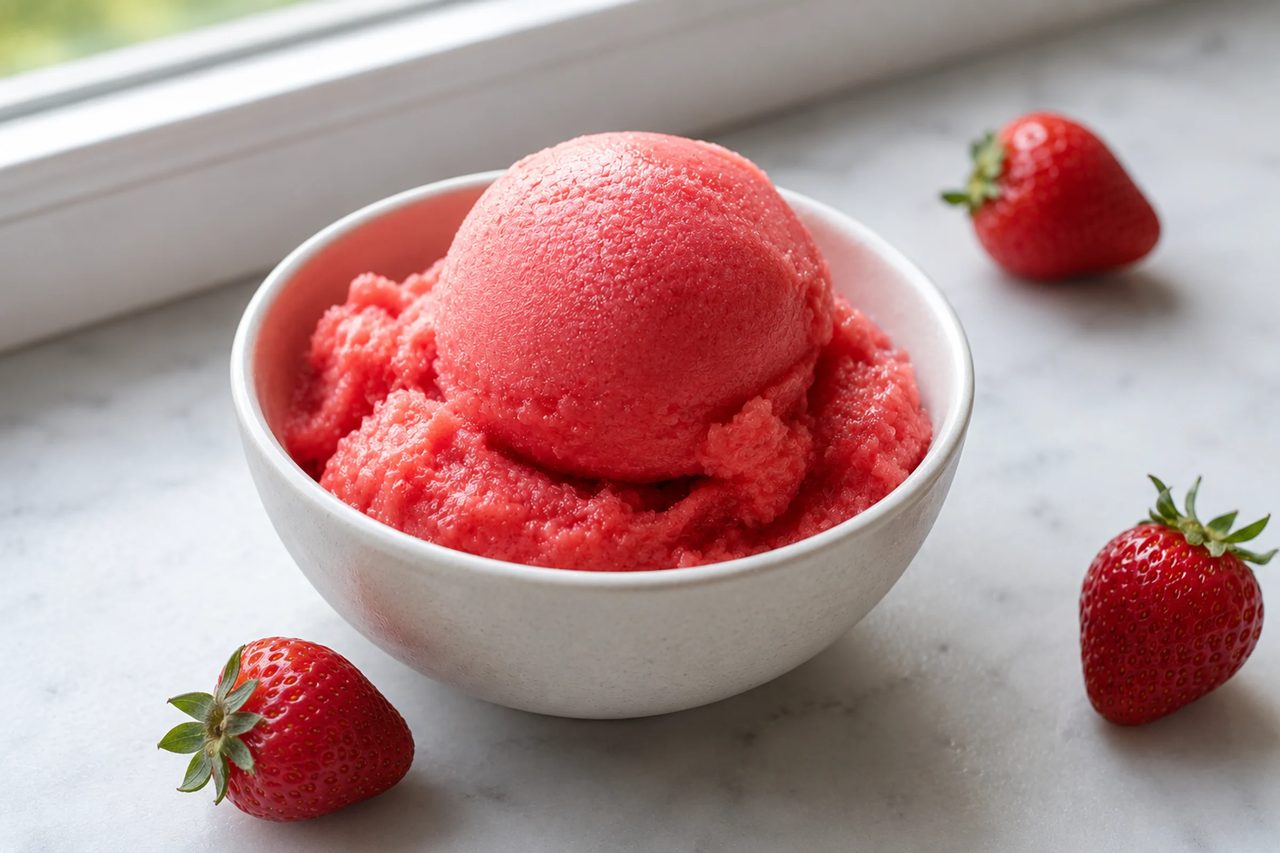
Strawberry is the sorbet worth learning first, because it asks for almost nothing beyond ripe frozen berries, a few tablespoons of sugar, and a squeeze of lemon. No dairy, no protein powder, no pudding mix — the fruit carries the entire scoop, so the berries you start with decide how good it is. Frozen fruit is not the compromise here; it is the better ingredient. Berries bound for the freezer are picked closer to ripe than the ones sitting in a February clamshell, and the ice that formed inside them has already burst their cell walls, so they collapse into a deep, saturated puree rather than a pale one. A January pint really can taste like June.
Texture is settled before the machine is switched on. With no fat and no dairy in the pint, dissolved sugar is the only thing standing between a scoop and a block of flavored ice: it lowers the freezing point and keeps the crystals too small to feel. Strawberry needs more of that help than its neighbors, bringing neither the concentrated sweetness of ripe mango nor the pulp and fiber that give a raspberry puree its body. Four tablespoons of sugar to two cups of fruit is the floor, and it only works once fully dissolved, so blend past the point where the base looks smooth. Then freeze the pint level for a full 24 hours.
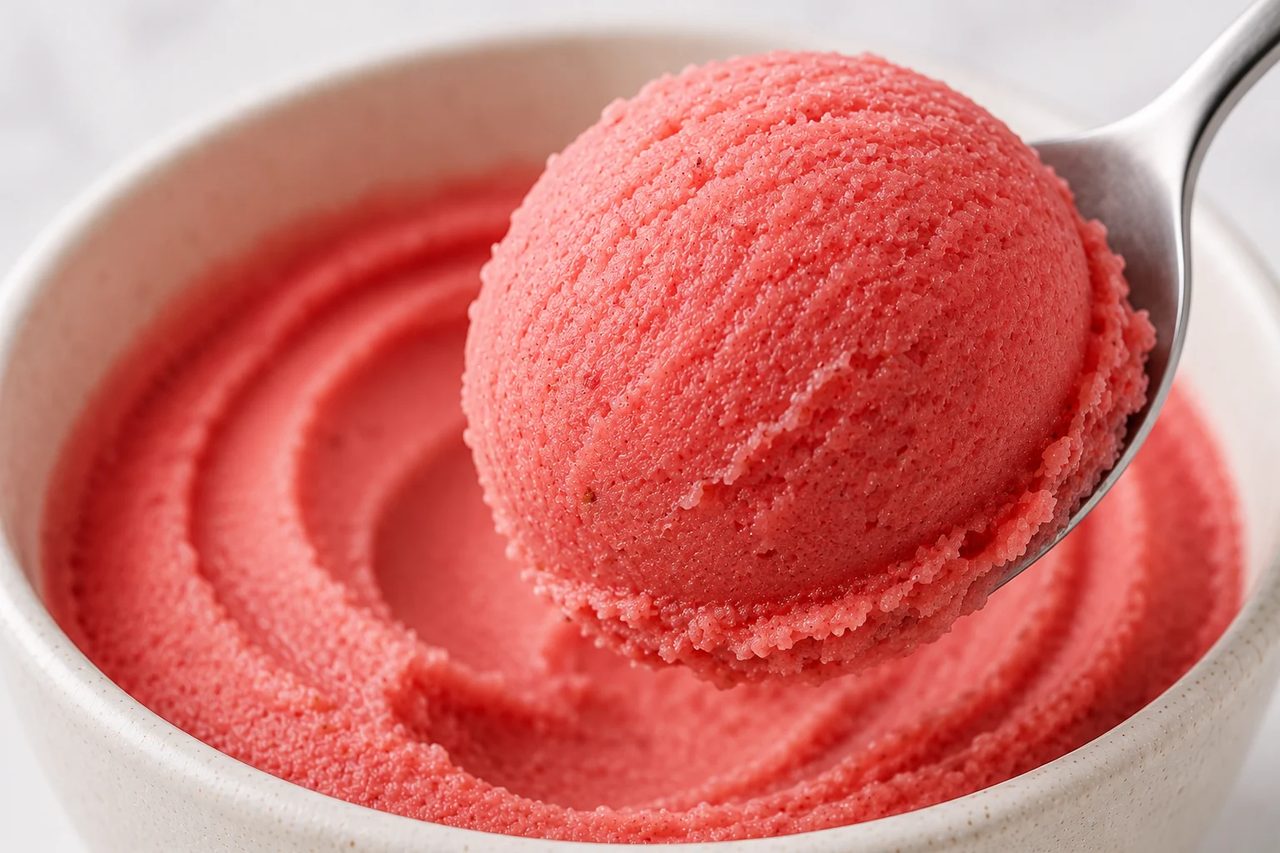
The first pass out of the machine will look closer to shaved ice than sorbet; that is what a lean fruit block does, and a tablespoon of water on the Re-spin program pulls it into something you can scoop. Serve it soft, straight from the paddle, or level the surface and give it fifteen minutes back in the freezer for firmer scoops. Strawberry also takes company better than the sharper fruits do: basil or a strip of lime zest steeped into the base, a teaspoon of good balsamic, a grind of black pepper. Top with sliced berries, coconut whip, or a shard of dark chocolate for contrast.
Ingredients
- 2 cups frozen strawberries
- 4 tablespoons granulated sugar
- 4 tablespoons water
- 1 tablespoon fresh lemon juice
- Pinch of fine salt
Method
- In a blender, combine the frozen strawberries, sugar, water, lemon juice, and salt. Blend until smooth, scraping down the sides as needed, so the sugar is dissolved and no chunks remain.
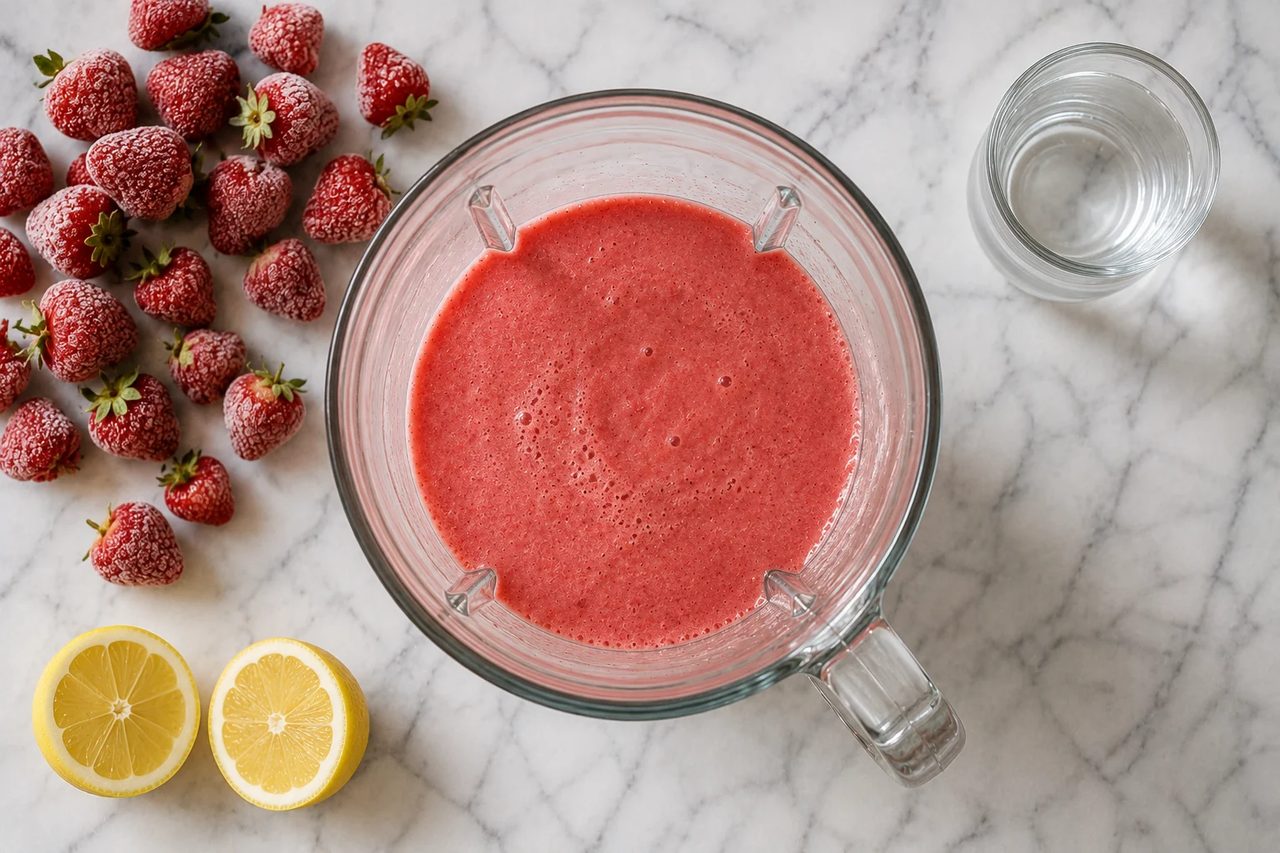
- Pour the puree into a Ninja CREAMi or Swirl pint container, cap it, and freeze on a level shelf for at least 24 hours until the base is frozen solid and flat.
- Remove the lid, place the pint in the outer bowl, and run the Sorbet program until the machine finishes its spin.
- If the sorbet looks crumbly or powdery, add 1 tablespoon of water and run the Re-spin program until it turns smooth and creamy.
- Serve immediately for a soft, scoopable texture, or smooth the top and refreeze for 15 to 20 minutes for firmer scoops.
Notes & tips
Sugar is the only structure in this pint. No fat, no protein, and no egg are here to hold water still, so the sugar is not seasoning — it is the structure. Dissolved in the puree, it lowers the freezing point, keeping some of the water liquid at freezer temperature and stopping the rest from setting into coarse crystals. Four tablespoons per 2 cups of berries is the floor, not a suggestion; cutting it is a texture decision, not a diet one.
Strawberry brings less to the pint than mango or raspberry does. That is why the three sorbets here are sweetened differently. Ripe mango is much sweeter fruit with dense flesh, so 3 tablespoons carries it, and raspberry puree is thick with pulp and fiber. Strawberry has neither advantage — mild fruit, thin low-pectin flesh, a puree that pours like juice, which is also why 4 tablespoons of water is all the blender needs. For more body without more sweetness, make one of those four tablespoons light corn syrup or glucose instead.
Sugar that never dissolves never counts. Freezing-point depression comes from sugar in solution; grains sitting in a cold slurry contribute nothing. That is why the recipe asks you to blend until no chunks remain: frozen berries sit barely above freezing, and cold liquid takes up sugar slowly. Rub a drop between finger and thumb; if it feels gritty, keep blending. On a weak blender, warm the sugar and the water into a syrup, cool it completely, then blend that into the fruit.
Freeze it dead flat, and give it the whole day. The blade works from the top of the block downward, so it can only read a surface that set level. A tilted shelf, or a pint pulled early, gives a coarse spin no matter how carefully the base was mixed. Keep the puree below the max-fill line, cap it, and leave it for the full 24 hours.
A powdery first pass is the machine working, not failing. A lean, rock-hard fruit block shatters into shards before friction can whip it, which is why the Sorbet program often delivers something closer to shaved ice. Add 1 tablespoon of water and use the Re-spin program: the liquid gives the blade something to emulsify, and the shards bind into a dense, smooth mass. Running the full Sorbet cycle again just warms the pint toward soup.
Icy, crumbly, and soupy are three different failures. Icy means the base itself was wrong — short on dissolved sugar, or frozen on a slope or for less than a day — and spinning will not rescue it, so correct the next batch, not this one. Crumbly means dry, the ordinary state of a first pass; add liquid a spoonful at a time so you never overshoot. Soupy is the opposite fault, from too much water or a pint left standing: smooth the surface and give it 15 to 20 minutes back in the freezer.
The lemon is a tablespoon here where the raspberry pint takes a teaspoon. Strawberry is the round, mild berry, generously sweet against its own acid, and cold suppresses sweetness and aroma far more than sourness. A base that tasted balanced at room temperature reads flat once frozen, so the tablespoon exists to put back an edge the freezer takes, not to make the sorbet taste of lemon. The pinch of salt works the same seam from the other side, and acid earns its keep visually too: the red pigments in strawberries show brighter in an acidic base.
Riffs for a berry that takes company well. The same 2 cups to 4 tablespoons carries blackberries or a mixed-berry blend. Steep basil leaves or a strip of lime zest into the base and strain them out, or add a teaspoon of aged balsamic, which reads as depth rather than vinegar. A scoop of unflavored protein powder loosened with oat milk makes a more filling pint, at some cost to the fruit perfume. Save mix-ins for after the first spin: drive a spoon handle to the bottom of the pint, add chopped freeze-dried strawberries or mini chocolate chips, and run the Mix-In program so they stay in pieces.
Leftovers, and the one handling rule. Store leftovers capped and level in the coldest part of the freezer, and finish them inside about two weeks. Sorbet sets considerably harder overnight, so let it stand briefly and run a fresh Re-spin. Nothing here is cooked, and the base carries no dairy, egg, nut, or gluten — though mix-ins are where those come back in, so read labels when serving other people. The one rule is temperature: if the puree is not going into the freezer straight away, keep it covered in the refrigerator, which is all the USDA cold-storage guidance asks of it.
Strawberry Sorbet FAQ
Why is my strawberry sorbet icy?
Look at the freeze before you blame the recipe. A pint that set on a tilted shelf, or came out before a full 24 hours, spins coarse however well it was blended. If the freeze was clean, the sugar is the suspect — either there was too little of it, or it never fully dissolved, and undissolved grains do nothing to keep crystals small. Neither fault can be spun out afterwards, so fix the next batch with an extra tablespoon, dissolved into a syrup first.
Can I use fresh strawberries instead of frozen?
You can, but frozen is genuinely the better choice here rather than the lazy one: berries headed for a freezer are picked riper, and the ice has already broken their cells down so they puree completely. Fresh fruit blends looser, and a thinner base sets into a harder block. If fresh is what you have, pick the reddest berries in the shop, hull past the pale core, and pour in 2 tablespoons of water instead of 4.
Can I cut the sugar in this sorbet?
Not far, because with no dairy in the pint the sugar is the structure and not the sweetness. Four tablespoons per 2 cups of berries is the floor; the mango sorbet manages on 3 only because ripe mango is much sweeter fruit to begin with. For a lighter pint, trade part of the sugar for allulose, or a monk-fruit blend that includes allulose, since both lower the freezing point. Erythritol by itself does not, and the pint sets bone hard.
Do I have to use fresh lemon juice, or will lime or bottled work?
Any of the three works, because the tablespoon is there for acid first and flavor second. Lime gives a slightly more tropical edge, and bottled lemon juice is the same acid in a duller package. What you should not do is leave it out: strawberry is sweet, mild fruit, freezing mutes sweetness far more than it mutes acid, and without that tablespoon the finished pint tastes flat and looks duller too.
How do I serve leftover sorbet the next day?
Expect to re-spin it rather than scoop it. A pint that has refrozen overnight is much firmer than the one that came off the paddle, so stand it on the counter for about 5 minutes and run the Re-spin program instead of chipping away at it. If it comes back powdery, a tablespoon of water and a second pass will bring it round. Keep it capped and level in the coldest part of the freezer.
Related recipes
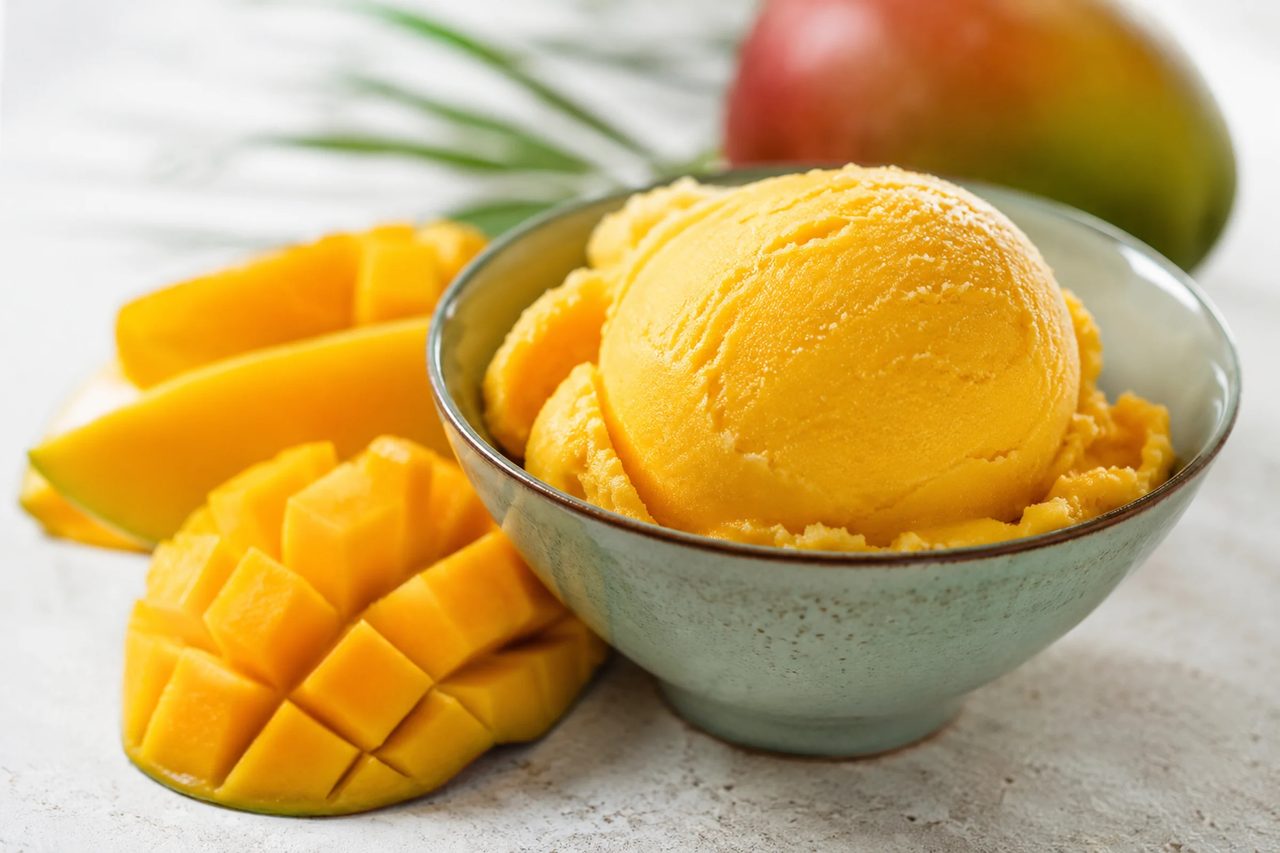
Mango Sorbet
A dairy-free tropical mango sorbet made in the Ninja CREAMi or Swirl, with a simple frozen-fruit base that spins into bright, smooth scoops.
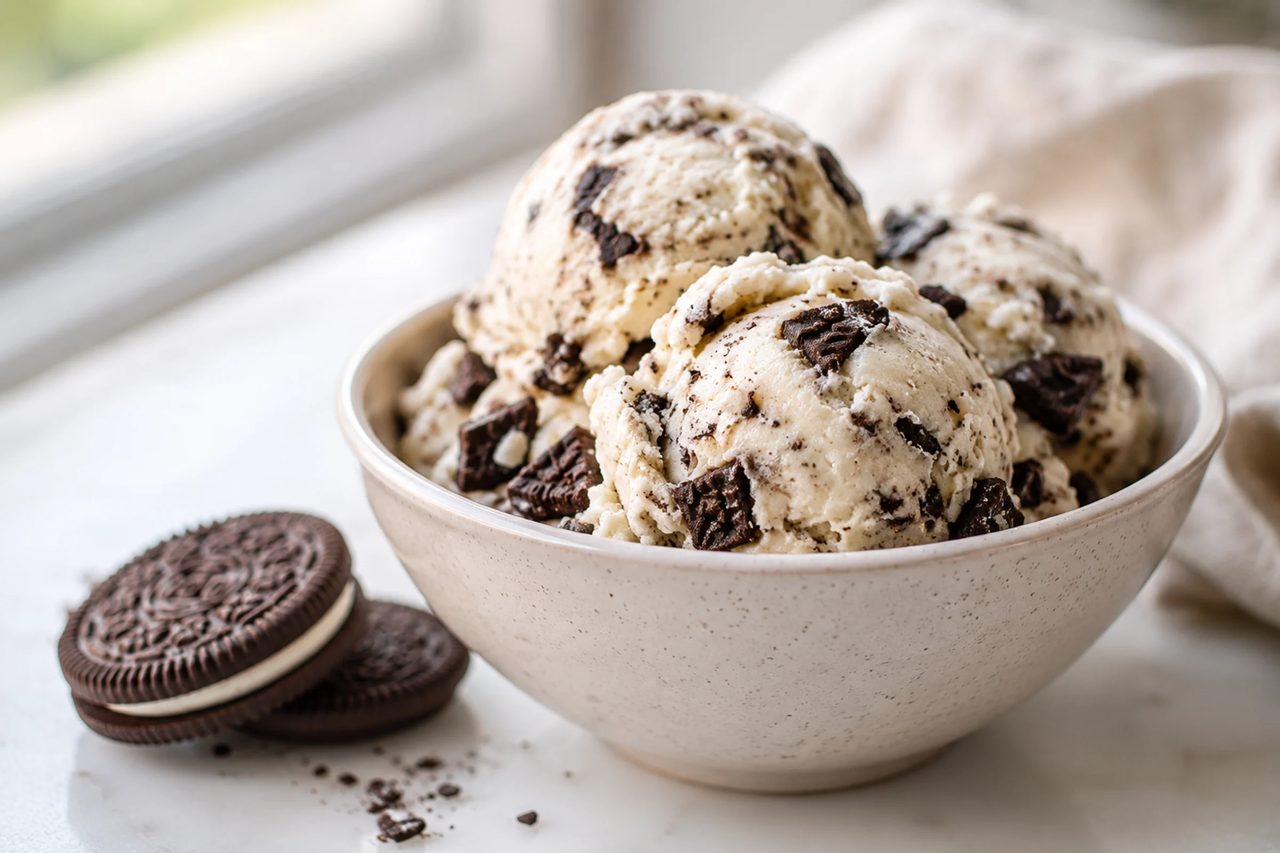
Cookies and Cream Ice Cream
A creamy vanilla base spun in the Ninja CREAMi or Swirl, then loaded with crushed chocolate sandwich cookies using the Mix-in program.