Mango Sorbet
A dairy-free tropical mango sorbet made in the Ninja CREAMi or Swirl, with a simple frozen-fruit base that spins into bright, smooth scoops.
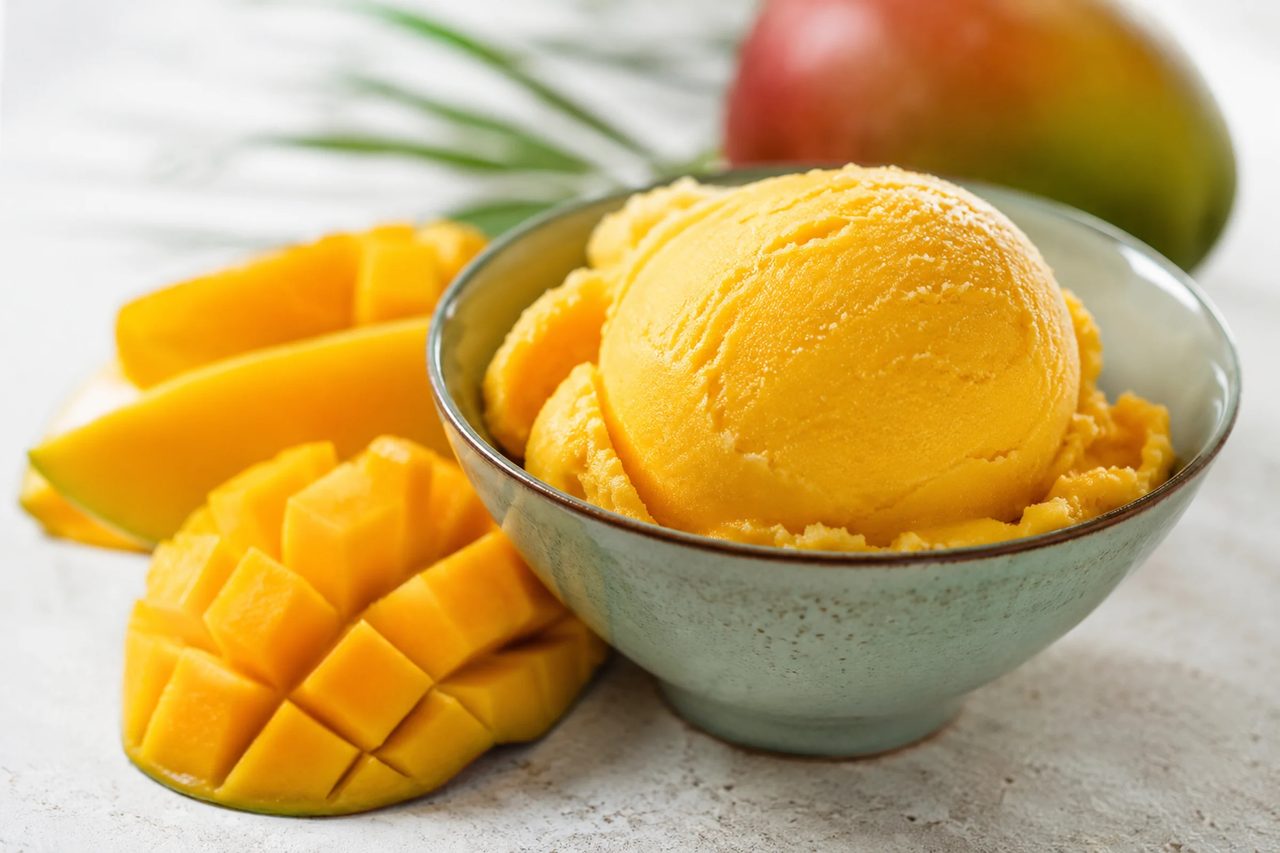
Mango is the sorbet that needs the least help. Ripe mango is markedly sweeter than any berry you could put in a pint, and its perfume — floral, faintly resinous, a little musky — carries through the cold where more delicate fruit fades out. That is why the ingredient list is this short: fruit, a spoonful of sugar, a splash of coconut water, a squeeze of lime, a pinch of salt. Nothing dairy, nothing powdered, nothing propping up the color. It also means the fruit you buy is most of the recipe: sugar stirred in later can correct a flat-tasting mango, but nothing puts back the aroma an underripe one never developed.
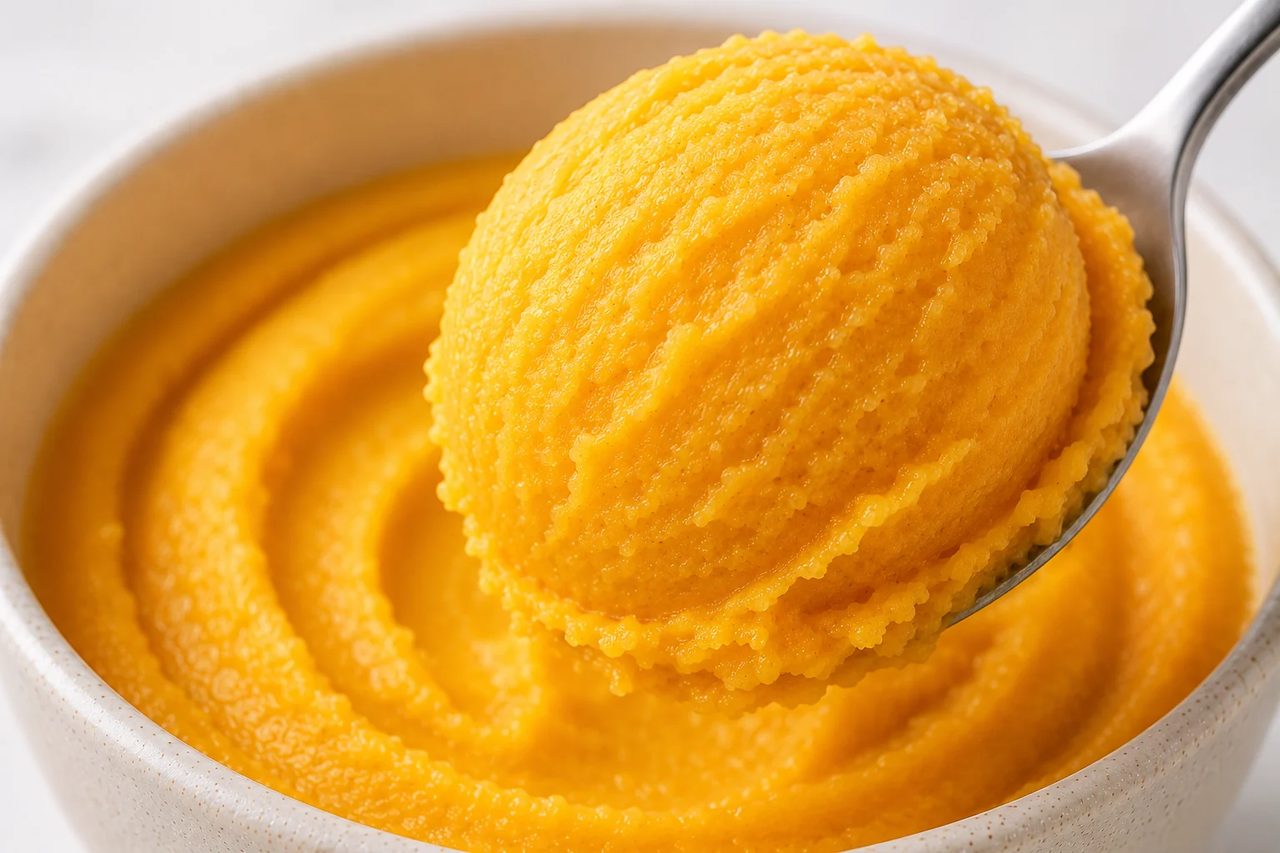
The texture question is really a sugar question, and ripe mango answers part of it before you measure anything. Sugar dissolved in a puree lowers its freezing point, so some of the water stays liquid at freezer temperature instead of setting into one hard block — that is the entire job the spoonfuls do here. The sweetness you can taste in a raw chunk is that same dissolved sugar, so a good share of the work is already done before the pint is filled — which is why this recipe runs on 3 tablespoons against the 4 the strawberry sorbet asks for. Its denser, less watery flesh helps from the other side, leaving less free water around to grow coarse crystals. Nothing is churned, though: the machine freezes the base solid and shaves it with a blade, so freeze the pint dead flat for a full 24 hours and still expect a powdery first pass. A tablespoon of coconut water and the Re-spin program pulls those shards into a smooth, ribbony scoop.
Serve it soft straight from the spin, or smooth the top and refreeze fifteen minutes for cleaner quenelles over coconut yogurt or warm sticky rice. Lime keeps the sweetness from turning cloying, and most things worth adding push the same way: chili-lime salt, a knob of fresh ginger blended into the base, or frozen pineapple or raspberry for the tartness mango lacks. A drizzle of coconut cream blurs it toward something creamier; toasted coconut or chopped macadamia folded in on the Mix-In program after the first spin gives it crunch.
Ingredients
- 2 cups frozen mango chunks
- 1/2 cup coconut water
- 3 tablespoons granulated sugar
- 1 tablespoon fresh lime juice
- Pinch of fine salt
Method
- In a blender, combine the frozen mango chunks, coconut water, sugar, lime juice, and salt. Blend until smooth, scraping down the sides as needed, so the sugar is dissolved and no chunks remain.
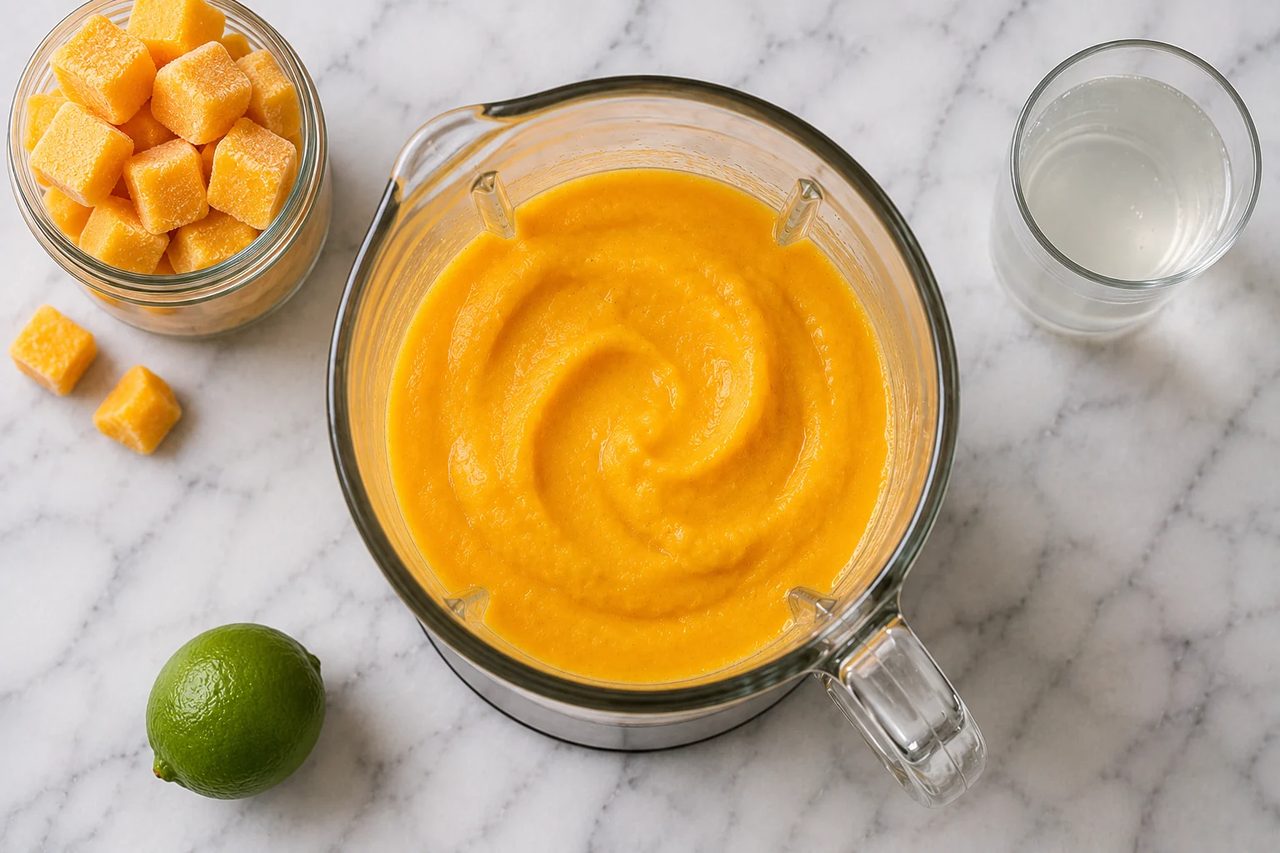
- Pour the puree into a Ninja CREAMi or Swirl pint container, cap it, and freeze on a level shelf for at least 24 hours until the base is frozen solid and flat.
- Remove the lid, place the pint in the outer bowl, and run the Sorbet program until the machine finishes its spin.
- If the sorbet looks crumbly or powdery, add 1 tablespoon of coconut water and run the Re-spin program until it turns smooth and creamy.
- Serve immediately for a soft, scoopable texture, or smooth the top and refreeze for 15 to 20 minutes for firmer scoops.
Notes & tips
The fruit’s own sugar is why 3 tablespoons is enough here. Sweetness in a sorbet is never only flavor. Sugar in solution depresses the freezing point, and ripe mango — the sweetest fruit on this site by a wide margin — arrives with a great deal of its own already dissolved in the flesh. So the base starts partway toward scoopable before the measuring spoon comes out, which is what lets it run a tablespoon under the strawberry sorbet without setting glassy. Denser, less watery flesh helps from the other direction, leaving less free water in the pint to grow into coarse ice. The useful consequence is diagnostic: when a mango pint spins coarse, suspect the fruit or the freeze long before you suspect the ratio, because a pale, underripe mango has quietly taken sugar out of the recipe in a way an underripe strawberry never could.
Less sugar does not mean optional sugar. There is still no fat, no protein, and no gum in this base, so sugar is doing all the structural work the fruit is not: it lowers the freezing point and keeps the crystals small enough to read as creamy. Drop the 3 tablespoons and the pint sets glassy and hard. Because a thick, cold mango puree dissolves sugar slowly, stir it into the coconut water before either meets the frozen fruit — ten seconds there is the difference between smooth sorbet and faint grit.
Ripeness matters more here than in any other sorbet. Sweetness and aroma arrive at different points in a mango’s life. An underripe one tastes green and faintly starchy, and while an extra teaspoon of sugar dissolved into the base can fix flat sweetness, nothing you add later supplies perfume the fruit never made. Taste a chunk from the bag before you commit the pint, and remember cold flattens sweetness: a base that tastes merely fine at room temperature will taste thinner frozen.
Coconut water is a flavor decision, and worth a label check. It is faintly sweet and slightly saline, which rounds mango out and pushes the pint tropical. Plain water pulls the other way, leaving a cleaner, more purely mango scoop. Brands vary more than people expect — some are pressed, some are from concentrate with sugar added — so read the carton. If yours is on the sweet side, correct with lime rather than by cutting the sugar holding the texture together.
Lime does two jobs, and only one of them is brightness. The obvious one is balance: mango is the sweetest fruit on this site, and acid keeps it from reading as syrup. The less obvious one is that lime’s own resinous edge meets mango’s musky, faintly turpentine note and reads as intentional instead of odd. Lemon works as a substitute but is a plainer acid and leaves that muskiness exposed. Add the acid before freezing; a squeeze onto a spun pint only loosens it.
Fix an icy, crumbly, or soupy scoop. Icy and coarse points at the freeze — a tilted shelf, a base that thawed and refroze, or less than a full 24 hours — or at too little sugar. Crumbly and powdery is a different, normal problem: 1 tablespoon of coconut water plus the Re-spin program, not another full cycle. Soupy means the pint either took on more liquid than it needed or spent too long on the counter; smooth the top and refreeze 15 to 20 minutes. Measure that tablespoon rather than pouring; it is the whole margin between a scoop and a slush.
Riffs that suit a sweet, aromatic fruit. Mango takes heat and acid better than it takes more sweetness. A pinch of chili-lime salt or a small knob of fresh ginger blended into the base sharpens it; a handful of frozen pineapple or a few raspberries brings tartness mango cannot supply itself; a strip of lime zest steeped into the puree amplifies what is already there. Save the chunky additions for the Mix-In program once the pint has spun once; toasted coconut, chopped macadamia, or diced fresh mango stay in recognizable pieces that way.
Making it creamier or higher in protein. Two tablespoons of full-fat coconut cream, or a scoop of vanilla or unflavored plant protein blended into the base, gives a denser, less icy pint that leans toward tropical ice cream. Both add solids, so both stiffen the freeze — plan on a re-spin, and expect the mango perfume to be a little muted in exchange.
Storage, and the labels worth reading. Freeze leftovers in the same pint, capped and level, and use them within about two weeks. A pint that has sat overnight comes back much harder than the one you spun yesterday: let it stand five minutes, then run a fresh Re-spin instead of fighting it with a spoon. Nothing here is cooked; if the puree is not going straight into the freezer, keep it refrigerated, per general USDA cold-storage guidance. The recipe is dairy-free, gluten-free, and nut-free, but frozen fruit and coconut water can run on shared lines, and coconut cream or protein powder brings its own allergens.
Mango Sorbet FAQ
Why did my mango sorbet come out crumbly instead of creamy?
That powdery first pass is expected here, not a failed pint. Add 1 tablespoon of coconut water and run Re-spin, which is built for exactly this. Do not run the Sorbet program a second time; the full cycle warms the pint toward soup instead of tightening it into a scoop.
Which frozen mango works best, and why did mine spin up stringy?
Ataulfo (honey) and Kent are the safest picks because both are low in fiber. Stringy mango is a variety problem, not a technique problem: the machine shaves the frozen block rather than grinding it, so any thread the blender leaves in the puree turns up in the scoop. If the bag does not name a variety and the blended base feels hairy on the tongue, press it through a fine-mesh sieve before it goes into the pint.
Can I make this mango sorbet without coconut water?
Yes. Plain water swaps in for the 1/2 cup one-for-one and gives a cleaner, purer mango note; lemon juice can stand in for the lime. Keep the 3 tablespoons of sugar either way, since in a dairy-free sorbet the sugar is the stabilizer that keeps the pint scoopable rather than glassy. If your coconut water is a sweetened one, add a little more lime rather than taking sugar out.
Can I use fresh mango instead of frozen?
Yes, and it is the one way to control ripeness precisely: buy fruit that gives at the stem end and smells like mango through the skin, then peel and cube about 2 cups. Blend it with the coconut water as written and freeze the pint flat for the full 24 hours. Fresh ripe fruit is usually sweeter than the bag, so balance it with an extra squeeze of lime instead of cutting the sugar, which is holding the texture together.
Is this mango sorbet dairy-free and vegan?
As written it is dairy-free, gluten-free, nut-free, and already vegan. Check labels before serving guests, though: frozen fruit and coconut water can be processed on shared lines, and any protein powder, coconut cream, or mix-in you add introduces its own allergens.
Related recipes
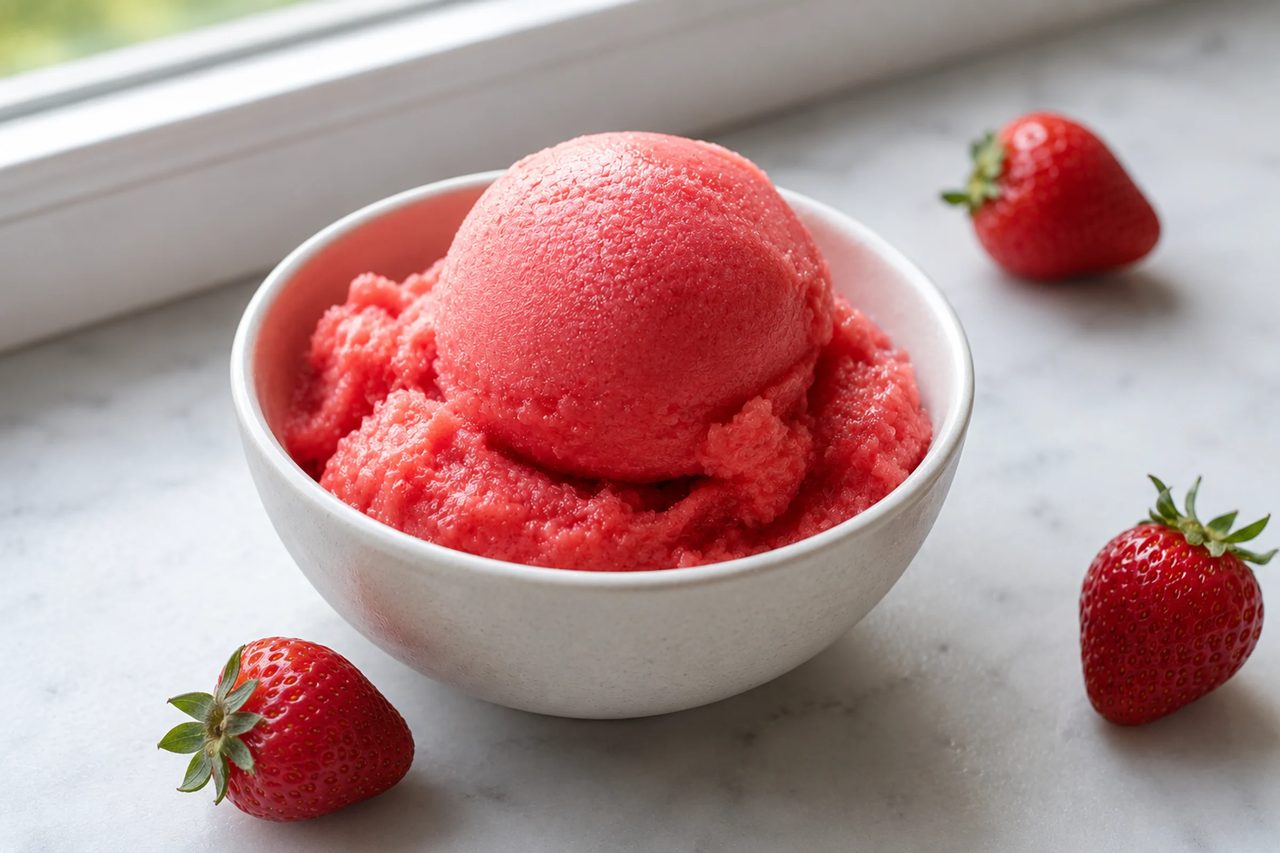
Strawberry Sorbet
A dairy-free, fruit-forward strawberry sorbet made in the Ninja CREAMi or Swirl, with a simple frozen-berry base that spins into bright, smooth scoops.
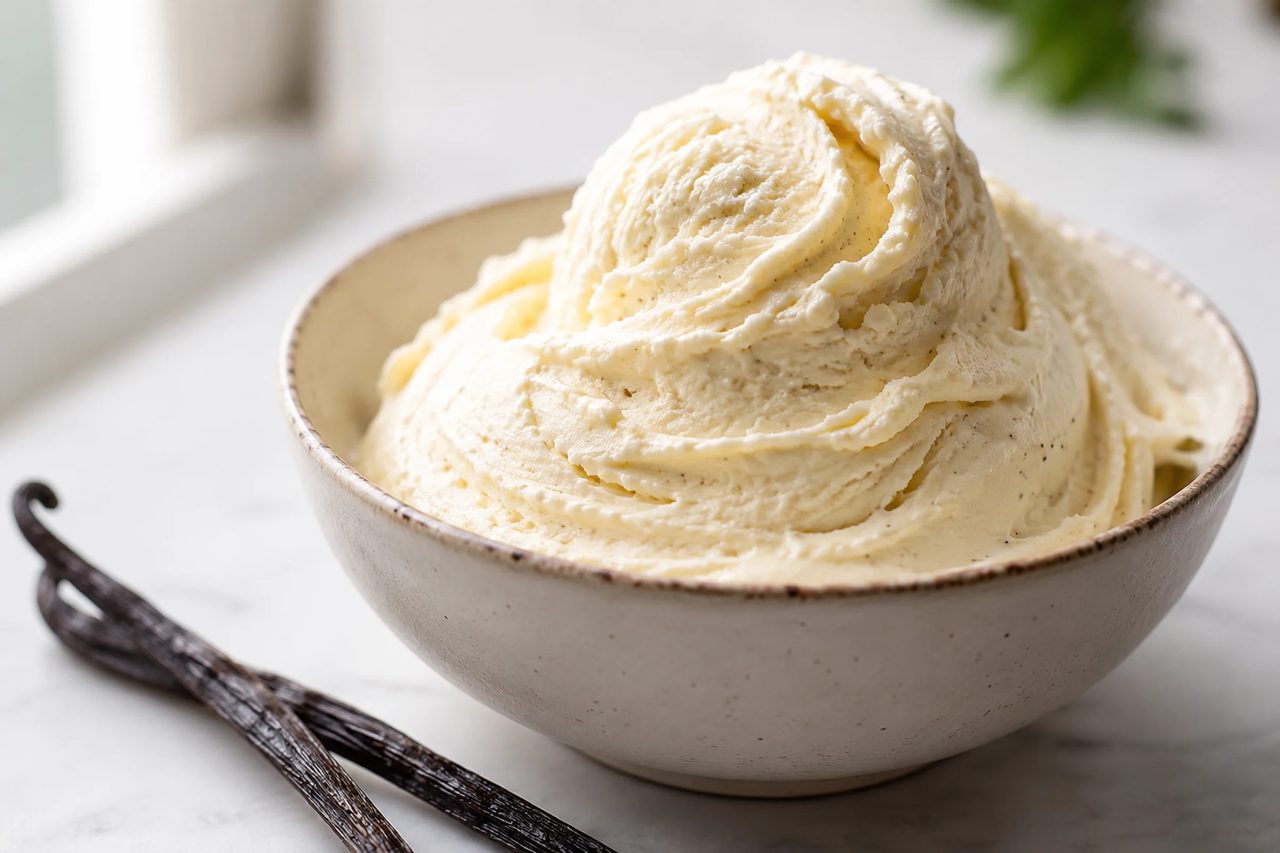
Vanilla Bean Protein Ice Cream
A creamy, high-protein vanilla ice cream made in the Ninja CREAMi or Swirl, with a stabilized base that spins smooth every time.