Cookies and Cream Ice Cream
A creamy vanilla base spun in the Ninja CREAMi or Swirl, then loaded with crushed chocolate sandwich cookies using the Mix-in program.
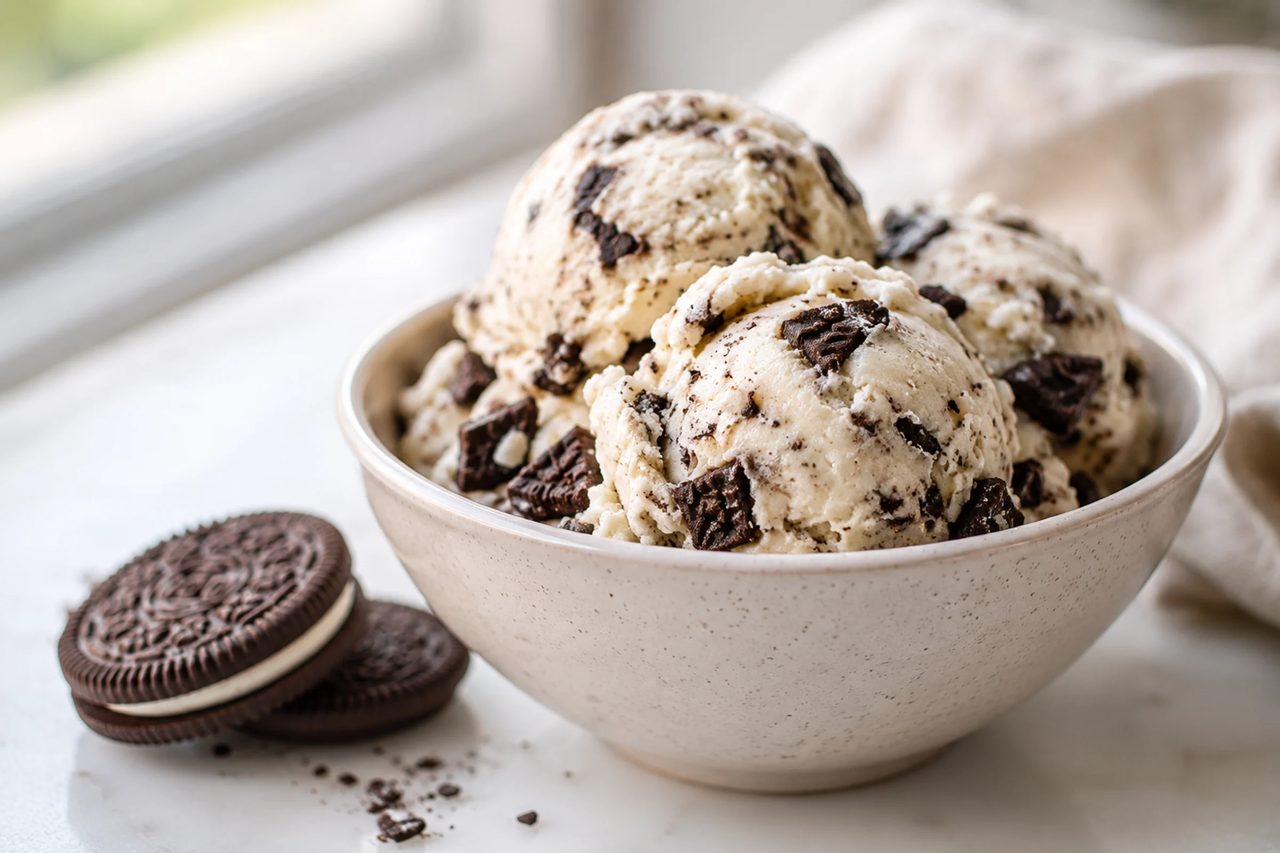
Cookies and cream is the flavor that proves the Ninja CREAMi is more than a novelty, and it is the recipe that teaches you the Mix-in program. There is no infusion to steep, no custard to cook and nothing to strain: a plain vanilla base goes into the pint, freezes solid, and spins down to soft-serve in a single pass. Everything that separates a good pint from a disappointing one happens in the minute after that spin finishes, and it comes down to two decisions. How coarsely you broke up four sandwich cookies, and the fact that they meet the ice cream only once it is already smooth.
The texture comes from a deliberately lean base plus one ingredient that is not there for flavor at all. A cup of whole milk against just 2 tablespoons of heavy cream keeps the vanilla clean and neutral rather than buttery, which is the point: the cookies are meant to be the loudest thing in the pint. With that little fat to hold free water still across a 24-hour freeze, the tablespoon of instant pudding mix is doing structural work, keeping moisture in place so the blade shaves fine crystals instead of coarse ice. The cookies then go in on the Mix-in pass, where they stay as dark shards against white instead of bleeding into gray.
Serve it straight from the spin for glossy soft-serve, or smooth the top and refreeze for 15 to 20 minutes if you want scoops that hold on a cone. The variations are all swaps of the same two parts. Mint sandwich cookies, peanut butter ones or golden vanilla wafers each redirect the flavor without changing a single step, and a spoonful of cookie butter folded into the smooth base adds depth without adding crunch. One thing worth knowing before you plan around it: the cookie pieces are at their crispest the day they go in, so this is a pint to finish in a few days rather than ration.
Ingredients
- 1 cup whole milk
- 2 tablespoons heavy cream
- 3 tablespoons granulated sugar
- 1 tablespoon instant vanilla pudding mix
- 1 teaspoon vanilla extract
- 4 chocolate sandwich cookies, roughly crushed
- Pinch of fine salt
Method
- In a bowl or large measuring cup, whisk the milk, cream, sugar, pudding mix, vanilla extract, and salt until completely smooth with no dry lumps.
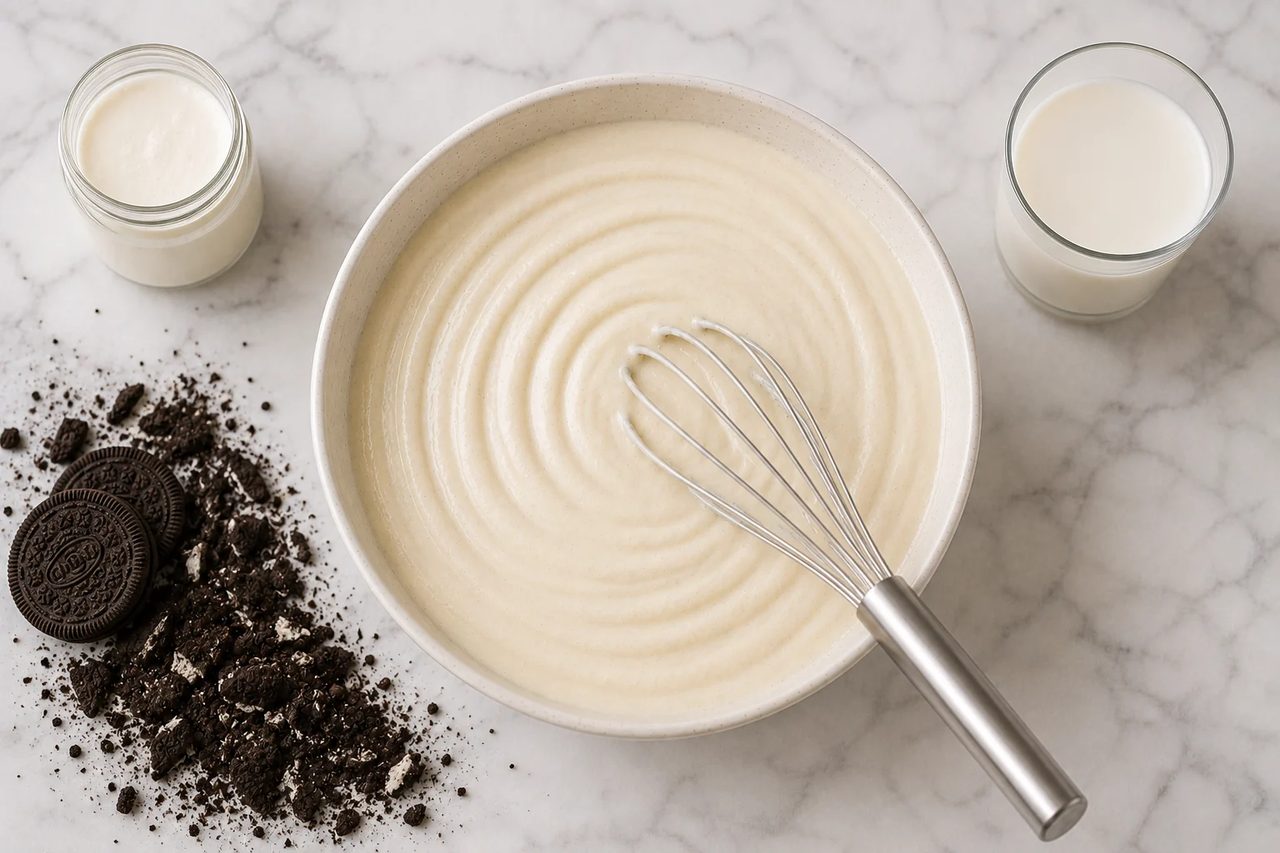
- Pour the base into a Ninja CREAMi or Swirl pint container, cap it, and freeze on a level shelf for at least 24 hours until solid.
- Remove the lid, place the pint in the outer bowl, and run the Ice Cream program until the machine finishes its spin.
- If the base looks crumbly or powdery, add 1 tablespoon of milk and run the Re-spin program until it turns smooth and creamy.
- Serve immediately for soft-serve texture, or smooth the top and refreeze for 15 to 20 minutes for firmer scoops.
Notes & tips
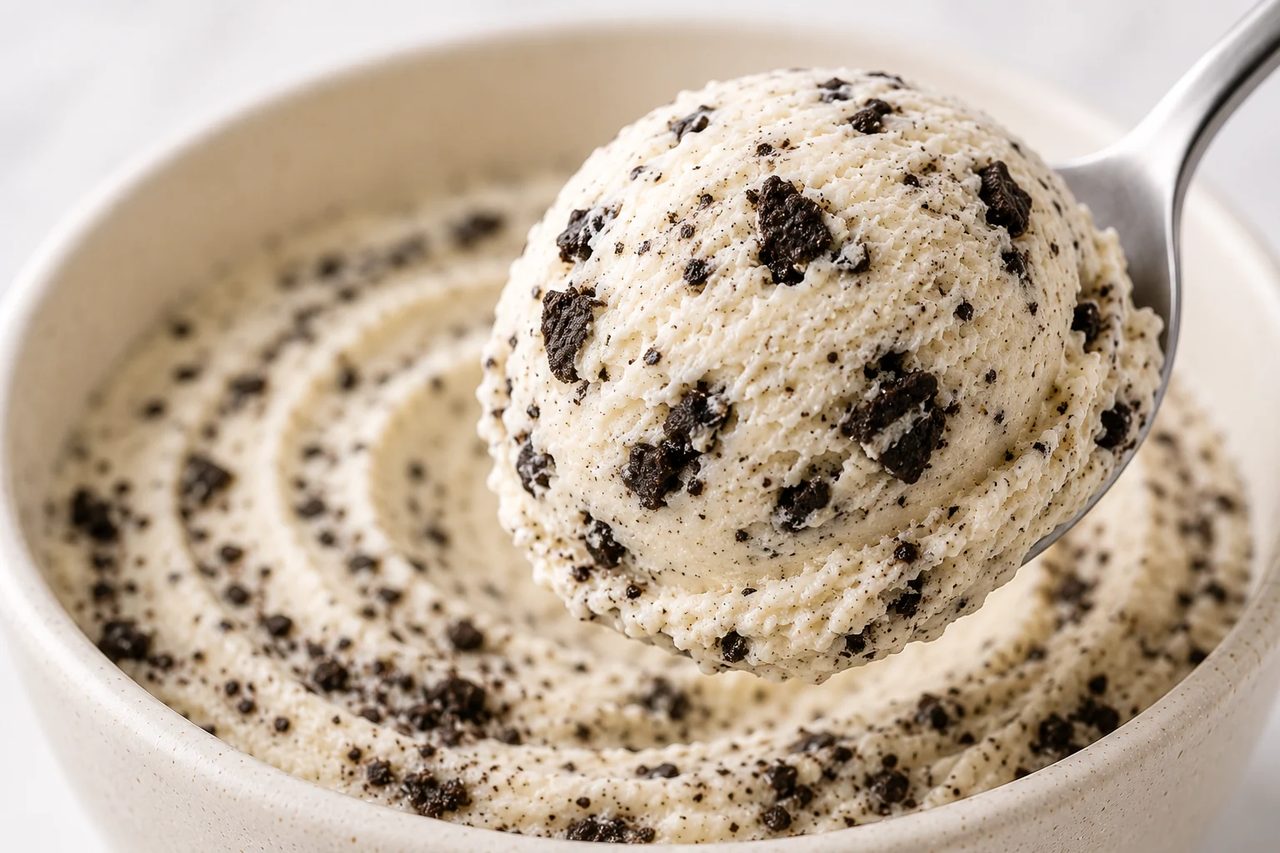
Everything about this flavor rides on when the cookies go in. Crushed cookies belong in the pint on the Mix-in program, after the first spin has produced smooth ice cream. A sandwich cookie is a dry, porous biscuit and a base is wet: leave the two together for 24 hours and the wafer wicks up moisture until it has the texture of a damp cheesecake crust. The blade then shaves straight through it and spreads the debris evenly. What comes out is uniformly beige, mildly chocolatey, and has nothing in it to bite.
Crush by hand so the pieces come out uneven. Break the four cookies apart with your fingers rather than pulsing them in a food processor, which reduces the lot to powder almost instantly. You want three grades at once: pea-sized chunks you actually chew, gravel-sized crumb, and the fine dust off the broken edges. The dust is not waste — it tints the ice cream and carries cocoa into every spoonful, which frees the chunks to do nothing but supply contrast. Pieces that are all one size make a duller pint.
The vanilla base is plain on purpose. Whisking cocoa into the base to help the flavor along is the wrong instinct. The dark wafer is already the chocolate here, and its bitterness only registers against something pale and sweet; brown the base too and the whole thing flattens into an unremarkable chocolate ice cream with texture in it. The vanilla and the pinch of salt keep the background interesting without arguing with the cookie. Anything you add to the base should support the wafer rather than imitate it.
Get the texture right before the cookies go in, never after. A powdery first spin is normal for a base this lean: a rock-hard block shatters before it can whip. Fix it with a tablespoon of milk and the dedicated Re-spin program, not a second run of the Ice Cream cycle, which works the pint toward soup. Do that while it is still plain vanilla. Once the cookies are folded through, every further pass grinds them finer and the chunks do not come back.
A base this lean cannot skip the stabilizer. One cup of milk against 2 tablespoons of cream does not carry enough fat to keep free water from collecting into coarse crystals over a long freeze, which is what the tablespoon of instant vanilla pudding mix is for: its starches and gums hold that water in place. A cream-heavy custard can manage without one. Swap in 1 tablespoon of cream cheese blended smooth or a scant 1/8 teaspoon of xanthan gum if you prefer, but never more than a tablespoon of any of them.
Troubleshoot the texture. Coarse and icy: short on sugar or stabilizer, or the pint froze on a sloped shelf. Powdery: a spoonful of milk, then Re-spin. Slumped and soupy: too much liquid on the re-spin, or a pint left standing while you crushed cookies — press the surface flat and refreeze for 15 to 20 minutes. Cookies gone to gray streaks: they went in before the freeze, or the pint was spun again after the Mix-in pass.
Variations that keep the contrast intact. Changing the cookie changes the most for the least effort: mint sandwich cookies, peanut butter ones, or golden vanilla wafers for a paler pint. Cookie butter stirred into the smooth ice cream just before the Mix-in run adds depth without adding crunch, and a quarter teaspoon of espresso powder in the base makes the wafers read darker instead of making the base taste of coffee. For a dairy-free version, full-fat coconut milk or barista-style oat milk plus a teaspoon of neutral oil replaces the milk and cream, and many classic sandwich cookies are already vegan.
Cookie crunch has a clock on it. The instant crushed cookies meet ice cream they begin pulling moisture out of it — the same mechanism that ruins them in the base, only slowed by the cold. They are at their best the day they go in and soften steadily from there, so plan this as a pint you finish inside 3 or 4 days rather than one you ration. Keep leftovers capped and flat in the pint they were spun in; a refrozen one wants about 5 minutes out and a fresh re-spin, which costs you a little more chunk size.
Food safety and allergens. Nothing here is cooked and nothing contains raw egg, so the only handling rule is temperature: refrigerate the whisked base if it is not going into the freezer straight away, in line with USDA cold-storage guidance. Allergen risk here arrives mostly through the packaged parts, so read those labels — wheat and frequently soy in the sandwich cookies, soy in many instant pudding mixes, and dairy in the milk and cream.
Cookies and Cream Ice Cream FAQ
What actually happens if I stir the cookies into the base before freezing?
You get chocolate-ish ice cream with no pieces in it. A sandwich cookie is a dry, porous biscuit, and a day submerged in a wet base hydrates it into something closer to a damp crust; the blade then shaves that softened wafer and distributes it evenly, so the color and the cocoa go everywhere and the contrast goes nowhere. Hold the 4 cookies back and add them on the Mix-in program after the first spin.
Can I crush the cookies in a food processor?
You can, but it gives you one texture instead of three, and it does it in about two seconds. Breaking the cookies apart with your fingers leaves pea-sized chunks, gravel-sized crumb, and fine dust all in the same bowl, which is what makes the pint interesting to eat. If the processor is already out, pulse two cookies to dust for color and snap the other two by hand.
Should I scrape the creme filling out first?
No. The filling is mostly sugar and fat, and it softens into the ice cream during the Mix-in pass rather than staying as a separate piece, which adds a little sweetness and richness to a base built lean on both. Wafers on their own would leave the pint drier and more bitter than the flavor is supposed to taste. Twist the cookies apart only if you want that drier, darker version deliberately.
Can I replace the instant pudding mix?
Yes: 1 tablespoon of softened cream cheese blended smooth, or a scant 1/8 teaspoon of xanthan gum. What you cannot do is leave it out, because 1 cup of milk against 2 tablespoons of cream has no spare fat to hold free water still through a 24-hour freeze. Stay at the single tablespoon; more sets the pint gummy.
How long do the cookie pieces stay crunchy, and how should I keep leftovers?
About a day at their crispest, because the crumbs go on drawing moisture out of the ice cream even at freezer temperature. Cap the pint, keep it flat and cold, and finish it within 3 or 4 days rather than treating it as a two-week staple. Refrozen pints want a re-spin to come back to soft serve, but note that the pass costs you chunk size, so scoop what you can before reaching for the machine.
Related recipes
Vanilla Bean Protein Ice Cream
A creamy, high-protein vanilla ice cream made in the Ninja CREAMi or Swirl, with a stabilized base that spins smooth every time.
Strawberry Sorbet
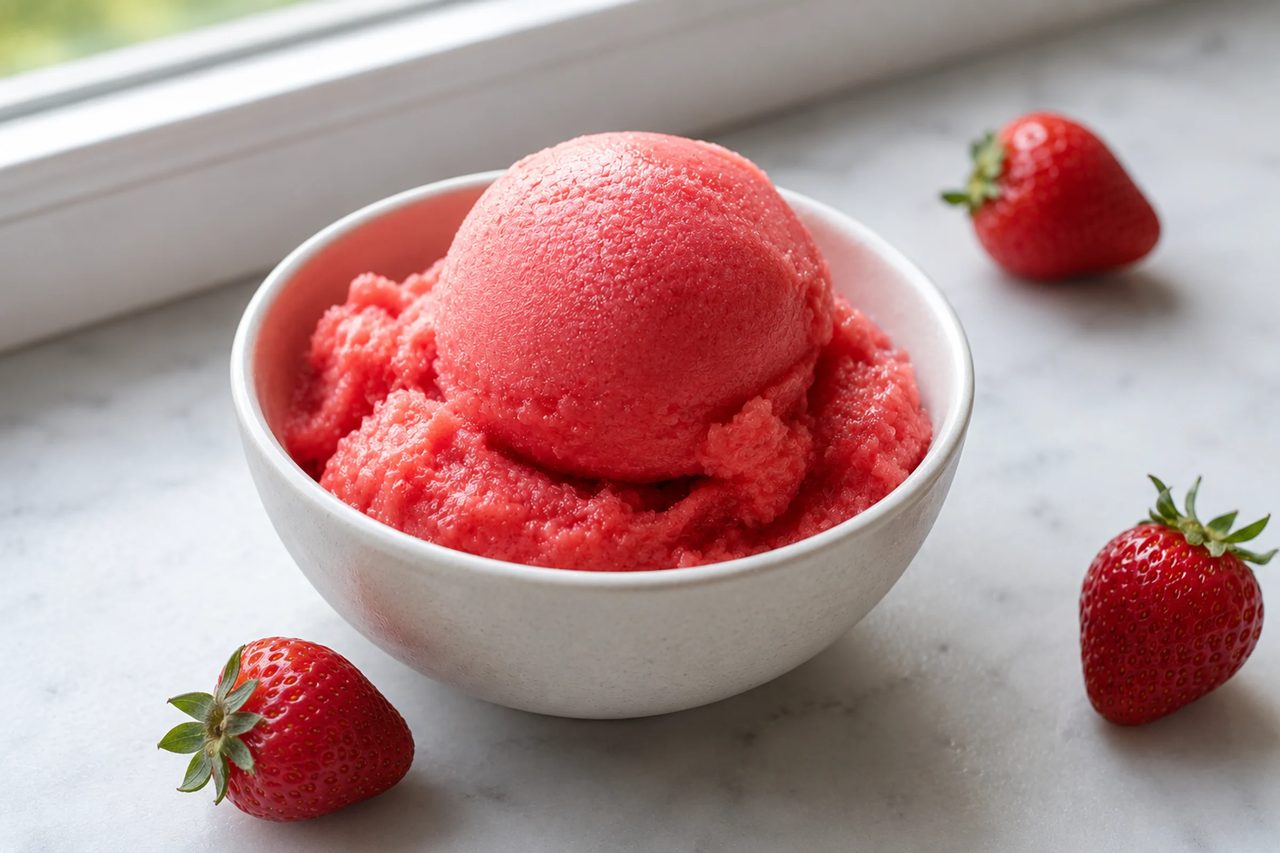
A dairy-free, fruit-forward strawberry sorbet made in the Ninja CREAMi or Swirl, with a simple frozen-berry base that spins into bright, smooth scoops.