Raspberry Sorbet
A dairy-free raspberry sorbet made in the Ninja CREAMi or Swirl, with a tart berry base you can strain silky and seedless or leave whole for more body.
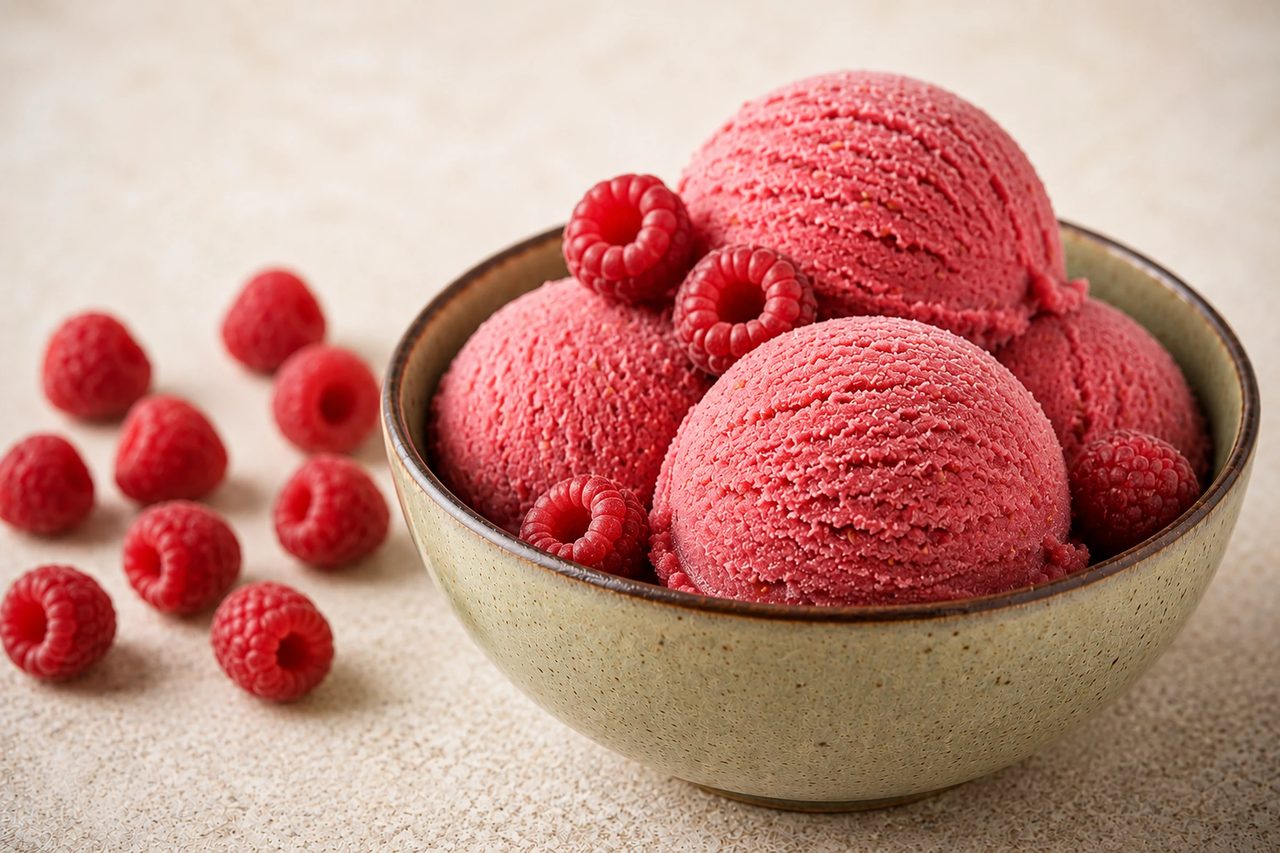
Raspberry is the most assertive of the berry sorbets: sharper than strawberry, nothing like the round tropical sweetness of mango, and perfumed in a way that survives freezing better than almost any other fruit. That acidity is the whole appeal and also the thing to plan around, because cold blunts sweetness while doing very little to soften acid. A base that tastes correct at room temperature will read thin and puckering once it is frozen, so this one carries a touch more sweetener than a strawberry base and only a teaspoon of lemon instead of a tablespoon. The berries bring their own.
The real decision here is the seeds. Raspberry seeds are hard, numerous, and small enough to lodge between teeth, and because the machine shaves a frozen block rather than pulverizing it, whatever goes into the pint comes back out in the scoop. Pressing the puree through a fine-mesh sieve buys a genuinely silky, sorbet-shop texture, but it costs you: the seeds leave with a good share of the pulp and fiber that gave the base its grip, and a strained pint spins leaner and crumblier as a result. That is why two tablespoons of light corn syrup go in alongside the sugar. Syrup holds onto water during freezing far more stubbornly than granulated sugar does, replacing the body the sieve took out and keeping the crystals fine. Skip the straining and you keep that body for free, at the price of a faint gritty crunch some people love and others cannot forgive.
Either way, freeze the pint dead flat for a full 24 hours, run the Sorbet program, and expect the first pass to look powdery — a lean fruit block almost always does. A tablespoon of water and the Re-spin program pulls it into a dense, ribbony scoop. Serve it soft straight from the machine, or smooth the top and refreeze for fifteen minutes for cleaner scoops. Raspberry takes well to contrast: a scoop next to a chocolate pint, a crack of black pepper, a strip of lemon zest steeped into the base, or a swirl of raspberry jam and shaved dark chocolate folded through on a short Mix-In pass.
Ingredients
- 2 cups frozen raspberries
- 4 tablespoons granulated sugar
- 2 tablespoons light corn syrup
- 6 tablespoons water
- 1 teaspoon fresh lemon juice
- Pinch of fine salt
Method
- In a blender, combine the frozen raspberries, sugar, corn syrup, water, lemon juice, and salt. Blend until smooth, scraping down the sides as needed, so the sugar is fully dissolved and no whole berries remain.
- For a seedless sorbet, pour the puree into a fine-mesh sieve set over a bowl and press it through with a flexible spatula, scraping until only a dry mat of seeds is left behind; discard the seeds. Skip this step if you would rather keep the seeds and the extra body they give the pint.
- Pour the puree into a Ninja CREAMi or Swirl pint container, cap it, and freeze on a level shelf for at least 24 hours until the base is frozen solid and flat.
- Remove the lid, place the pint in the outer bowl, and run the Sorbet program until the machine finishes its spin.
- If the sorbet looks crumbly or powdery, add 1 tablespoon of water and run the Re-spin program until it turns smooth and creamy. A strained base often needs this pass, and sometimes a second one.
- Serve immediately for a soft, scoopable texture, or smooth the top and refreeze for 15 to 20 minutes for firmer scoops.
Notes & tips
Seeds or no seeds is the only real decision here. The machine shaves a frozen block into fine shards; it does not grind, so a seed that goes into the pint comes out in the scoop. Pressing the puree through a fine-mesh sieve is the difference between a sorbet that reads glassy-smooth and one that has a faint grit to it. Work the puree with a flexible spatula rather than a spoon and keep going until the sieve holds only a dry mat of seeds, otherwise a surprising amount of usable pulp goes in the bin. A strained pint also sits visibly lower than an unstrained one, so scale up if you want a full pint of seedless sorbet.
What straining costs you, and how to pay it back. Seeds leave with pulp and fiber attached, and those solids were part of what kept the base from freezing into a clean sheet of ice. That is what the 2 tablespoons of light corn syrup are for: syrup holds onto water during freezing far better than granulated sugar, keeping crystals small and the scoop soft. Skip the straining and you can skip the syrup too, bumping the granulated sugar to 5 tablespoons instead. Glucose syrup works identically; honey works but brings its own flavor into a fruit that does not need company.
Acid is why this base is sweeter than the strawberry one. Raspberries are the sharpest fruit in this trio, and freezing mutes sweetness far more than it mutes acid. That is the reason the lemon here is a teaspoon rather than the tablespoon a strawberry base wants — the fruit is already supplying the brightness. Taste the puree cold-ish, before it goes into the pint, and let it seem a shade too sweet at that point; that is roughly where it will land after 24 hours in the freezer.
Fix an icy or crumbly scoop. Freeze the pint dead level for the full 24 hours so the surface sets flat, because the blade cannot shave cleanly through a sloped or half-frozen block. If the freeze was clean and the scoop still crackles, the base was short on sweetener. Crumbly and powdery is a different problem and a normal one, especially with a strained base: add 1 tablespoon of water and run the Re-spin program rather than re-running the full cycle, which warms and melts the pint.
Fix a soupy scoop. Too much water on the re-spin, or a pint that sat out while you worked, turns the sorbet slushy. Smooth the top, refreeze for 15 to 20 minutes, and serve. Add re-spin liquid a tablespoon at a time so you never overshoot.
Flavor riffs that suit a sharp fruit. Raspberry pairs with things that either soften or sharpen it. Steep a strip of lemon zest or a few basil leaves into the puree before freezing; add a crack of black pepper for a grown-up version; or blend in a handful of frozen strawberries or peaches to round the acid down. For mix-ins, use the Mix-In program after the first spin so shaved dark chocolate, crushed freeze-dried raspberries, or a jam ribbon fold through whole instead of pulverizing.
Higher-protein and lower-sugar swaps. Blend a scoop of unflavored or vanilla protein powder plus a splash of milk or oat milk into the base for a protein-forward pint; the extra solids also help the texture, though they mute the raspberry perfume. If you are cutting sugar, replace part of it with allulose or a monk-fruit-allulose blend, which still depress the freezing point where erythritol alone tends to freeze rock-hard. Do not cut the sweetener without replacing it — this base has nothing else holding it together.
Storage and re-serving. Keep leftovers capped in the same pint in the coldest part of the freezer. Refrozen sorbet sets harder than the pint you first spun, so give it about 5 minutes on the counter and run a fresh Re-spin instead of chipping at a solid block. Use within about two weeks for the best texture.
Food safety and allergens. This is a no-cook base with no dairy, egg, nuts, or gluten, so nothing here needs cooking — only freezing. If you are not freezing the puree right away, keep it refrigerated, per general USDA cold-storage guidance. Mix-ins such as chocolate, nuts, or dairy toppings reintroduce common allergens, so check labels when serving guests.
Raspberry Sorbet FAQ
Do I have to strain the raspberry seeds?
No, and there is a real trade-off either way. Straining gives the silkiest scoop, because the machine shaves the frozen block rather than grinding it and every seed you leave in the puree turns up in the finished sorbet. What the sieve takes out is pulp and fiber along with the seeds, so a strained pint freezes leaner and shatters more readily on the first spin. Leave the seeds in and you keep that body for free, with a faint crunch in exchange.
Why does this recipe use corn syrup when the strawberry sorbet does not?
Because straining removes the pulp that was doing the strawberry base's structural work. Syrup grips water during freezing more stubbornly than granulated sugar, so the 2 tablespoons stand in for the body the sieve took out and keep the crystals fine. If you are not straining, you can leave the corn syrup out and push the granulated sugar to 5 tablespoons instead; glucose syrup or honey also work, honey at the cost of its own flavor.
My raspberry sorbet tastes sour rather than sweet. What went wrong?
Probably nothing. Raspberries are the sharpest of the three fruits on this site, and cold flattens sweetness while leaving acid largely intact, so a base that tasted balanced in the blender will read tart once frozen. Taste the puree before it goes into the pint and expect it to seem slightly too sweet at that stage. If the finished pint is still too sharp, add a tablespoon of sugar next time rather than more lemon.
Can I use fresh raspberries instead of frozen?
Yes. The base is frozen flat for 24 hours regardless, so starting from fresh berries only changes how the blender behaves: fresh fruit purees more loosely, so hold back a tablespoon or two of the water and add it back only if the blender struggles. A puree that starts too thin sets into a harder, icier block.
How do I get a jam swirl through it without it disappearing?
Fold it in at the end, not into the base. Spin the pint first, poke a hole to the bottom, spoon in the jam, and run the Mix-In program so the raspberry ribbon stays visible instead of dissolving into the whole pint. Warm jam melts the sorbet at the edges, so use it straight from the fridge.
Related recipes
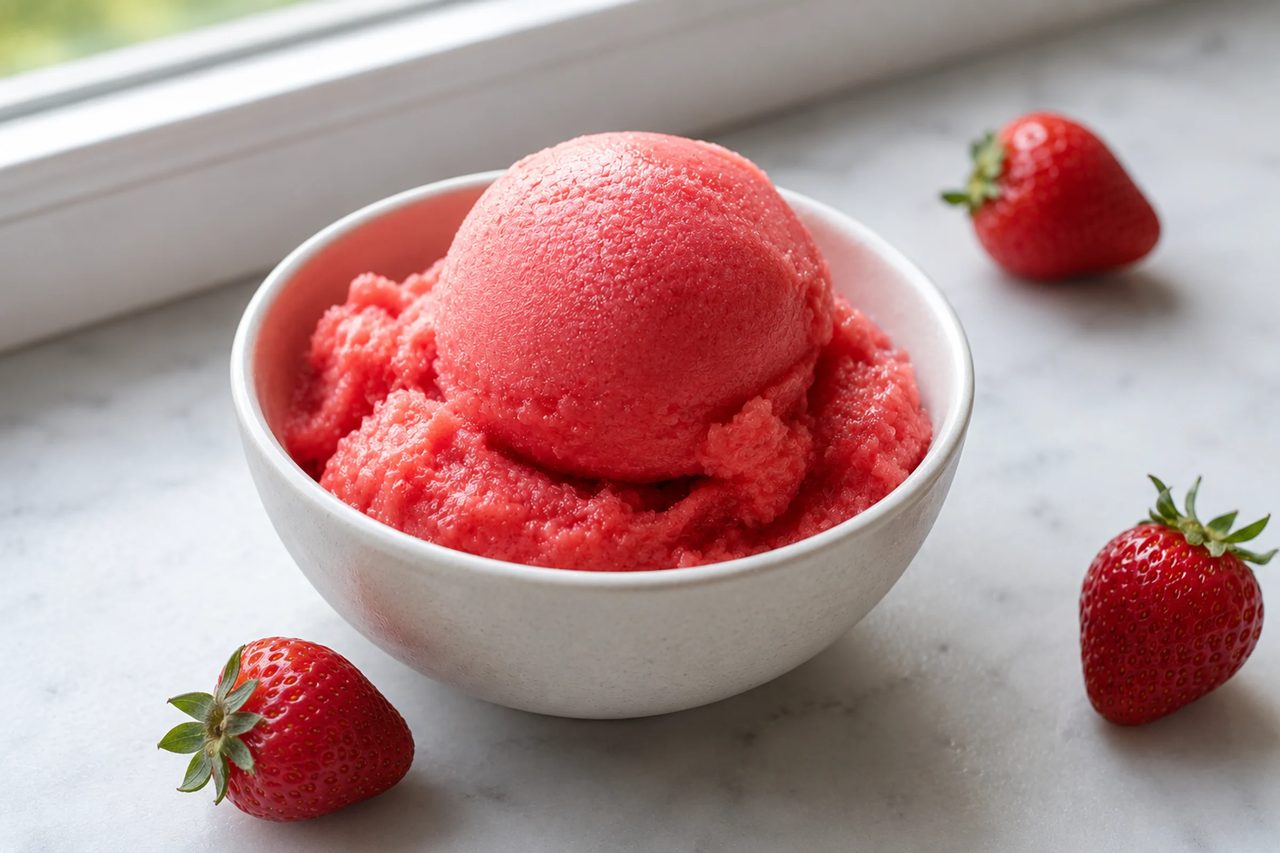
Strawberry Sorbet
A dairy-free, fruit-forward strawberry sorbet made in the Ninja CREAMi or Swirl, with a simple frozen-berry base that spins into bright, smooth scoops.
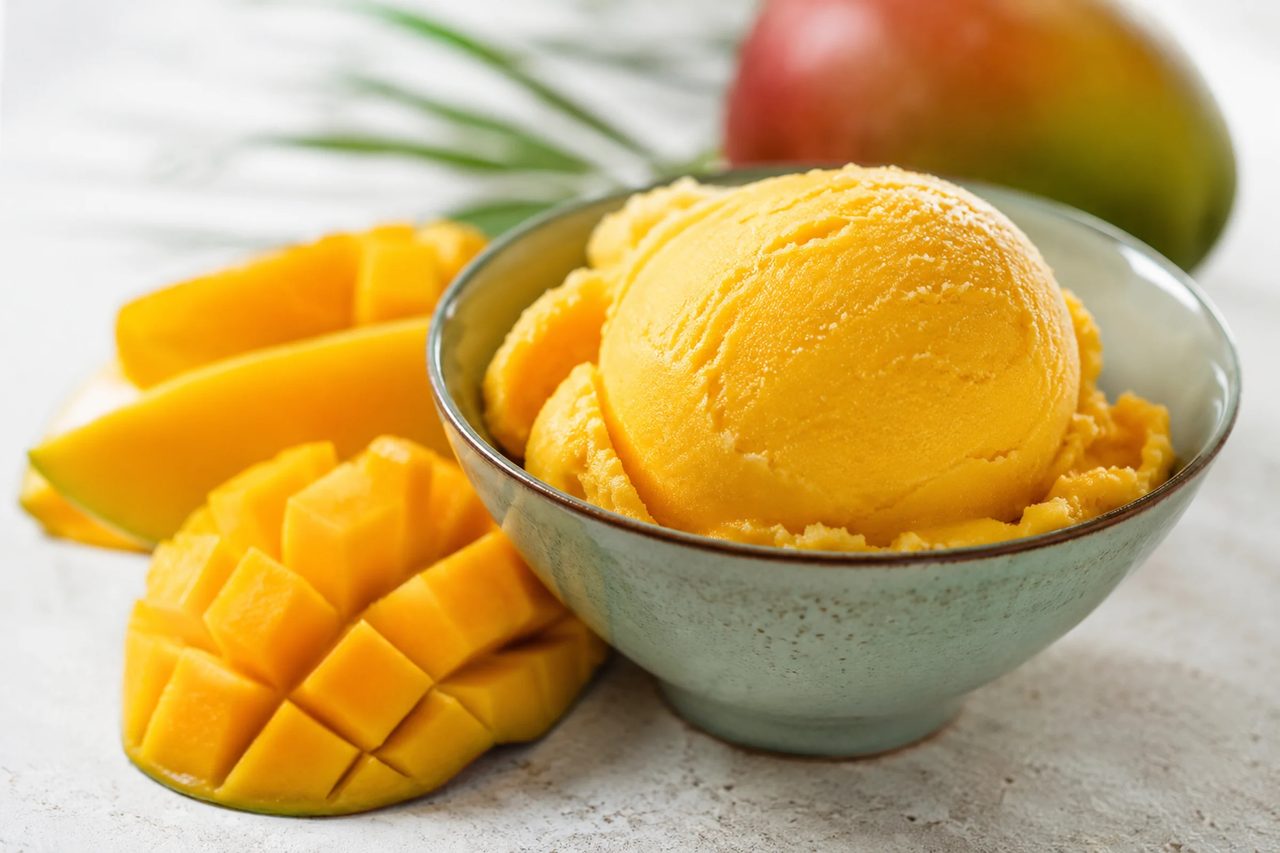
Mango Sorbet
A dairy-free tropical mango sorbet made in the Ninja CREAMi or Swirl, with a simple frozen-fruit base that spins into bright, smooth scoops.