Chocolate Protein Ice Cream
A rich, high-protein chocolate ice cream made in the Ninja CREAMi or Swirl, with a stabilized cocoa base that spins smooth and scoopable.
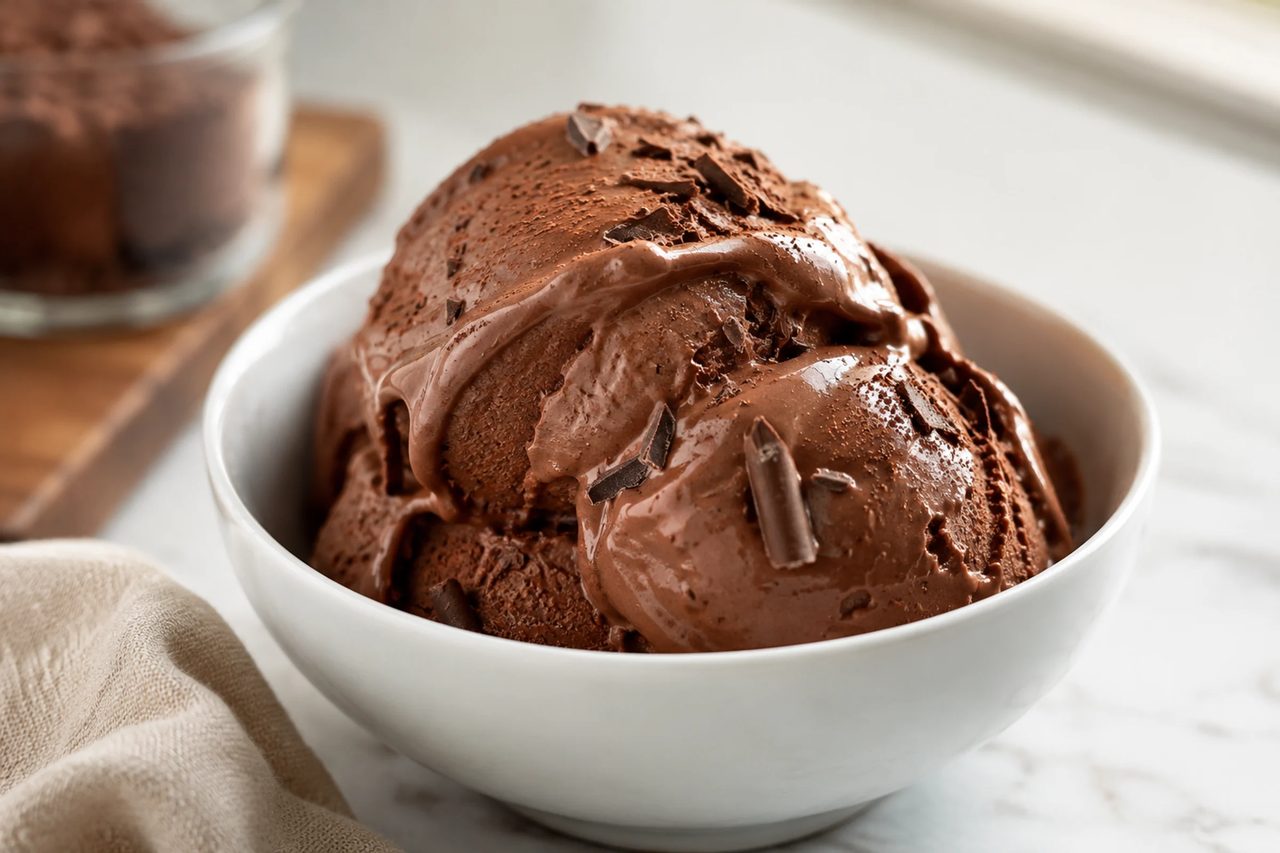
Chocolate is the flavor that proves a protein pint does not have to taste like a compromise. Cocoa's bitter depth covers the chalky edge whey leaves behind, and its roasted, faintly astringent finish reads as a grown-up dessert rather than a supplement served cold. The catch is that cocoa is also the ingredient most likely to make a protein pint chalky in the first place. Stripped of most of its fat, cocoa powder is largely starch and fiber, and dry solids of that kind pull water away from everything else in the pint.
Almost every other choice in this recipe exists to put that water back. A carton of chocolate milk arrives already sweetened and, unless you reached for the skim version, already carrying fat — two things plain milk would not bring, and both of them are what keep 2 tablespoons of cocoa from setting into a dry block. The sugar lowers the freezing point so the base never goes bone-hard, the fat coats the tongue and covers what is left of the protein's grain, and the tablespoon of instant pudding mix ties up the water still loose in the mix so the crystals stay fine through a full day in the freezer.
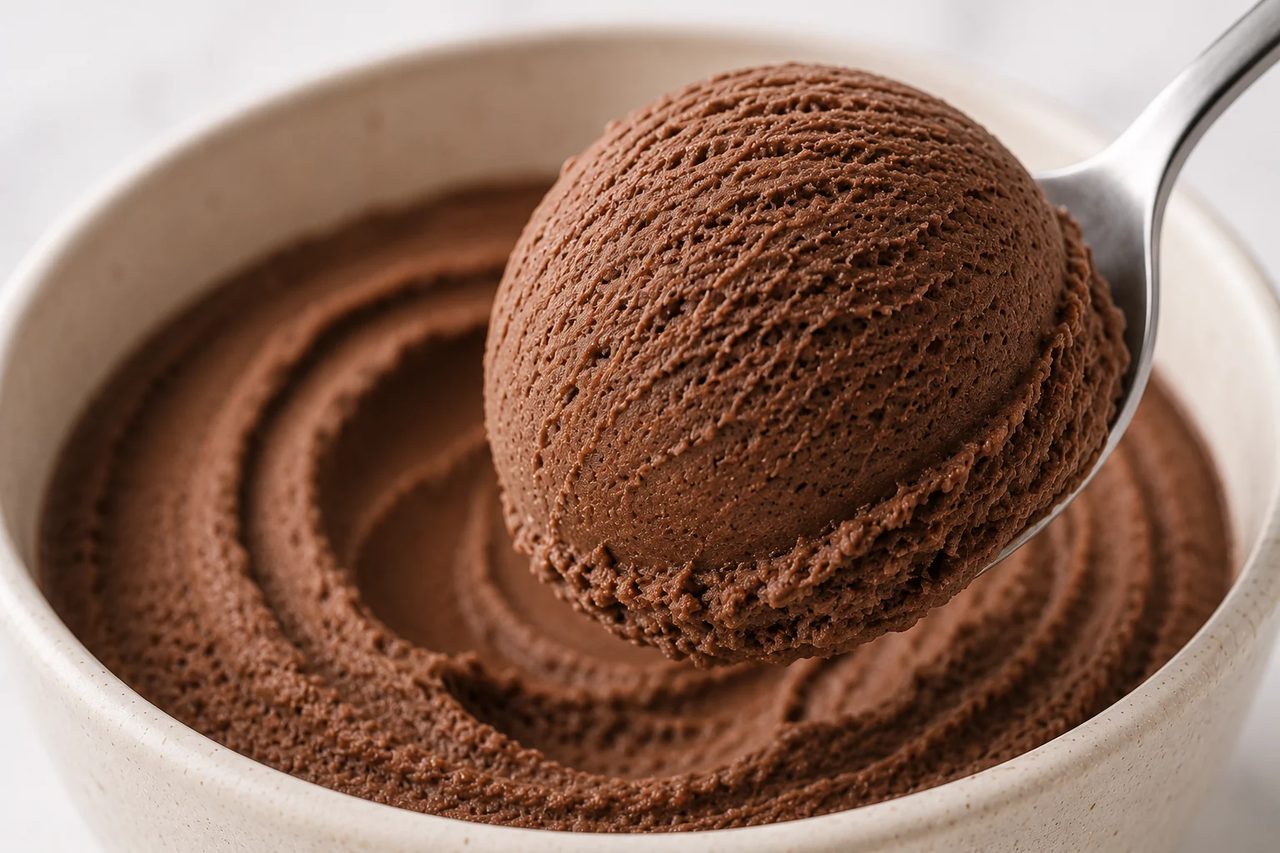
Freeze the pint dead flat, run the Ice Cream program, and expect the first pass to look powdery; a lean block shatters before it can whip, and a tablespoon of milk with a Re-spin turns it creamy. Eat it straight from the machine while it is soft, or smooth the top and give it another fifteen or twenty minutes in the freezer for scoops that hold an edge. From there it takes almost anything: chopped peanut butter cups or a hot-fudge ribbon folded in on the Mix-In program, flaky salt over the top, half a teaspoon of espresso powder for mocha. If you want it fudgier, reach for fat and sugar rather than for more cocoa.
Ingredients
- 1 cup chocolate milk
- 1 scoop chocolate protein powder
- 2 tablespoons unsweetened cocoa powder
- 2 tablespoons granulated sugar
- 1 tablespoon instant chocolate pudding mix
- Pinch of fine salt
Method
- In a bowl or large measuring cup, whisk the chocolate milk, protein powder, cocoa powder, sugar, pudding mix, and salt until completely smooth with no dry lumps of cocoa or protein.
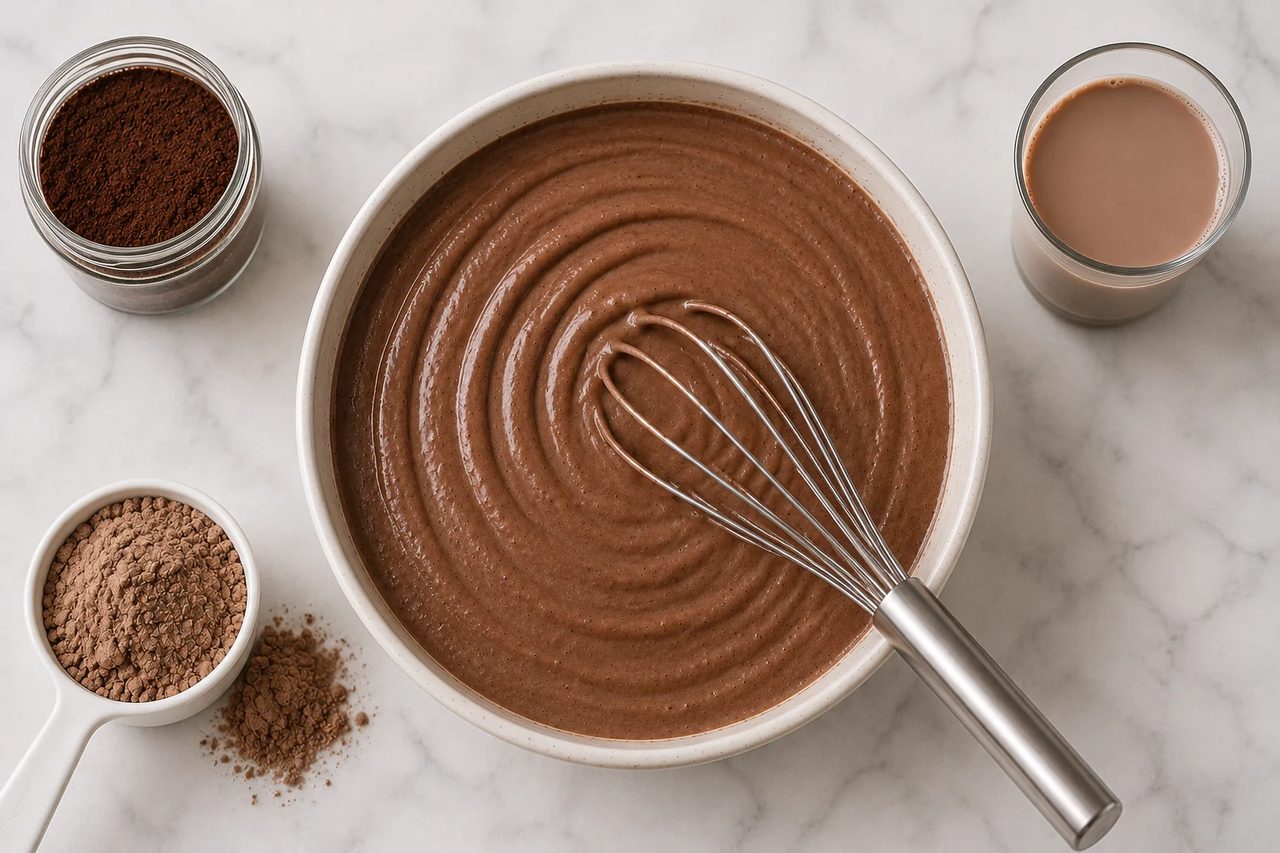
- Pour the base into a Ninja CREAMi or Swirl pint container, cap it, and freeze on a level shelf for at least 24 hours until solid.
- Remove the lid, place the pint in the outer bowl, and run the Ice Cream (or Lite Ice Cream) program until the machine finishes its spin.
- If the ice cream looks crumbly or powdery, add 1 tablespoon of milk and run the Re-spin program until it turns smooth and creamy.
- Serve immediately for soft-serve texture, or smooth the top and refreeze for 15 to 20 minutes for firmer scoops.
Notes & tips
Cocoa is a drying agent, and that is what makes most chocolate protein pints chalky. Cocoa powder is what is left once most of the cocoa butter is pressed out, so what you are adding is mainly starch and fiber. Dry solids of that kind take on water, and here they take it from the same cup of liquid the protein and the pudding starch are drawing on. That competition, not the protein alone, is why a chocolate pint comes out drier than a vanilla one.
Dutch-process or natural is a flavor decision here, and only that. Dutch-process cocoa has been treated with alkali, which darkens it and rounds its sharp notes off into something closer to a chocolate bar. Natural cocoa keeps its acidity, so it tastes brighter and fruitier and shows up more clearly against the whey. In baking the choice is constrained by leavening, since natural cocoa’s acid reacts with baking soda, but nothing here is baked: pick the flavor you want and keep the 2 tablespoons either way.
Chocolate milk is carrying fat and sugar that plain milk would not. A carton shows up sweetened already, and unless you bought skim it brings fat with it, which is why only 2 tablespoons of sugar go in on top. Substitute plain milk and you have to replace both — another tablespoon of sugar and a splash of cream — or the cocoa has nothing to soften it. For a dairy-free pint use barista-style oat or soy milk plus a teaspoon of neutral oil, since thin nut milks leave the cocoa nothing to hide behind.
One scoop to one cup, and the cocoa counts as part of that load. Roughly a cup of liquid to a scoop of protein is the target, but scoops run from 25 to 40 grams between brands, so weigh yours the first time you open a tub. At the top of that range, one cup of milk has to hydrate 40 grams of protein plus 11 grams of cocoa, and it sets into a crumbly brick; light on powder spins loose instead.
Make a paste before you make a base. Cocoa and protein powder both clump when they meet liquid all at once, and those lumps stay dry in the middle through the whole 24-hour freeze, which is where grit in the finished scoop comes from. Whisk the dry ingredients with two or three tablespoons of the chocolate milk into a thick, glossy paste first, then thin it with the rest; it is ready when no dry specks cling to the bowl.
The stabilizer has a ceiling, and going past it is how a pint turns gummy. The tablespoon of instant chocolate pudding mix carries modified starch and emulsifiers that hold onto free water as the base freezes, so the blade shaves fine crystals rather than coarse ice. Doubling it does not double the creaminess; it makes the scoop stretchy and faintly slick, the failure usually blamed on the protein. Pick one stabilizer and stop there: the tablespoon of pudding mix, 1/8 teaspoon of xanthan gum, or a tablespoon of softened cream cheese.
Expect a powdery first spin, and read the other textures correctly. A lean, rock-hard block shatters before it can whip, so crumbly is the normal first result: add a tablespoon of milk and use the Re-spin program instead of a second full cycle, which only warms the pint toward soup. Icy or coarse points instead at too little sugar or stabilizer, or a pint that did not freeze flat for the full 24 hours; soft and melty means too much liquid, and refreezing 15 to 20 minutes recovers it. Smooth but dry on the finish is the cocoa talking, and it wants fat, not another spin.
Push it fudgy with fat and sugar, not with more cocoa. Fudgy is a fat-and-sugar effect, and more cocoa only drags the pint back toward dry. A tablespoon of cream cheese, a splash of heavy cream, or trading 2 tablespoons of the chocolate milk for hot fudge each move it toward dense and glossy. For depth without dryness, 1/2 teaspoon of instant espresso powder or an extra pinch of salt beats another spoon of cocoa. Mix-ins belong after the first spin, on the Mix-In program, so peanut butter cups or brownie pieces fold through whole instead of being ground up.
Storage, re-serving, and allergens. Freeze leftovers in the same capped pint, give it 5 minutes on the counter, then run a fresh Re-spin, since a refrozen pint almost always needs one; use it within two weeks. Nothing here is cooked and nothing contains egg, so the raw-egg question that governs a custard never arises; if the base is not going into the freezer straight away, hold it in the refrigerator — see the USDA’s cold-storage guidance. Milk is the certain allergen, and soy a likely one in both the pudding mix and the protein powder.
Chocolate Protein Ice Cream FAQ
Can I add more cocoa to make it taste more chocolatey?
You can, but past about 3 tablespoons you trade flavor for texture. Cocoa is a dry solid, so a third and fourth spoon soak up water the protein and the pudding starch also want, and the pint starts reading dusty on the finish instead of darker. If it tastes weak rather than pale, the honest fixes are a bigger pinch of salt or a spoon of hot fudge folded in after the spin, both of which sharpen the chocolate without adding dry solids.
Should I use Dutch-process or natural cocoa powder?
Either, and here it is purely a flavor call. Dutch-process cocoa is treated with alkali, which darkens the color and mellows the sharpness into something rounder and more like a chocolate bar; natural cocoa keeps its acidity and tastes brighter and fruitier, which cuts through whey more noticeably. Nothing in this base is baked, so there is no leavening to balance and no reason the choice has to follow a baking rule.
Can I leave out the instant pudding mix?
Swap it rather than drop it, because nothing else in this base binds free water. One-eighth teaspoon of xanthan gum, 1 tablespoon of cream cheese, or a splash of heavy cream stands in for the tablespoon of pudding mix. Keep the dose there or lower; extra stabilizer sets the pint gummy rather than creamy.
Why does my chocolate protein ice cream taste chalky or grainy?
Cocoa and protein that never fully hydrated. Both are fine dry powders that clump around a dry core when they hit liquid all at once, and the lumps survive the freeze to reappear as grit. Whisk the cocoa, protein, sugar, and pudding mix with a splash of the chocolate milk into a thick paste first, then let it down with the rest. If the base was genuinely smooth and it still reads coarse, the pint is short on fat rather than short on whisking.
Can I make this dairy-free?
Yes, with two swaps and one label check. Barista-style oat or soy milk plus a teaspoon of neutral oil replaces the chocolate milk, and a plant-based powder replaces the whey. The pudding mix is the ingredient people miss: it commonly contains milk and soy, so read it or use 1/8 teaspoon of xanthan gum instead.
Related recipes
Peanut Butter Protein Ice Cream
A nutty, high-protein peanut butter ice cream made in the Ninja CREAMi or Swirl, with a stabilized base that spins smooth and scoopable.
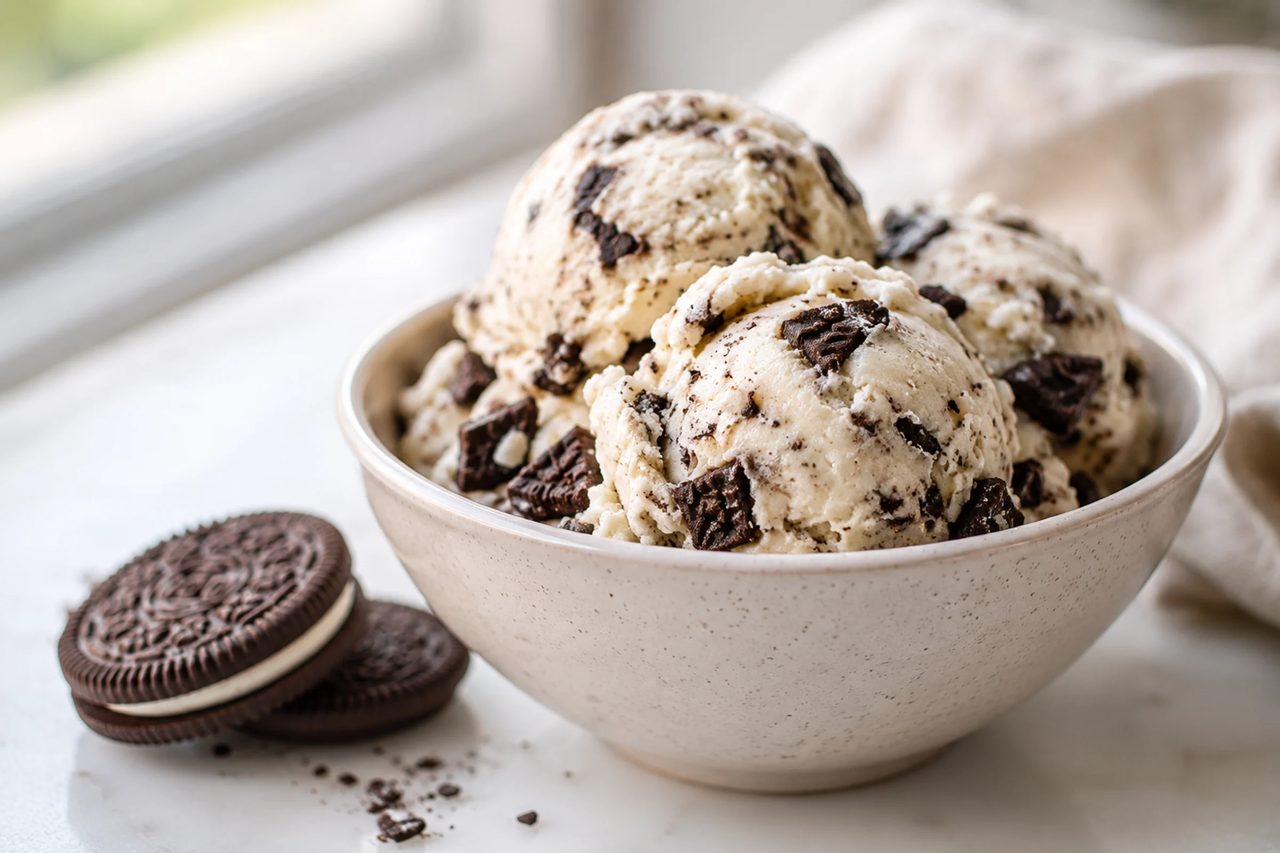
Cookies and Cream Ice Cream
A creamy vanilla base spun in the Ninja CREAMi or Swirl, then loaded with crushed chocolate sandwich cookies using the Mix-in program.