Peanut Butter Protein Ice Cream
A nutty, high-protein peanut butter ice cream made in the Ninja CREAMi or Swirl, with a stabilized base that spins smooth and scoopable.
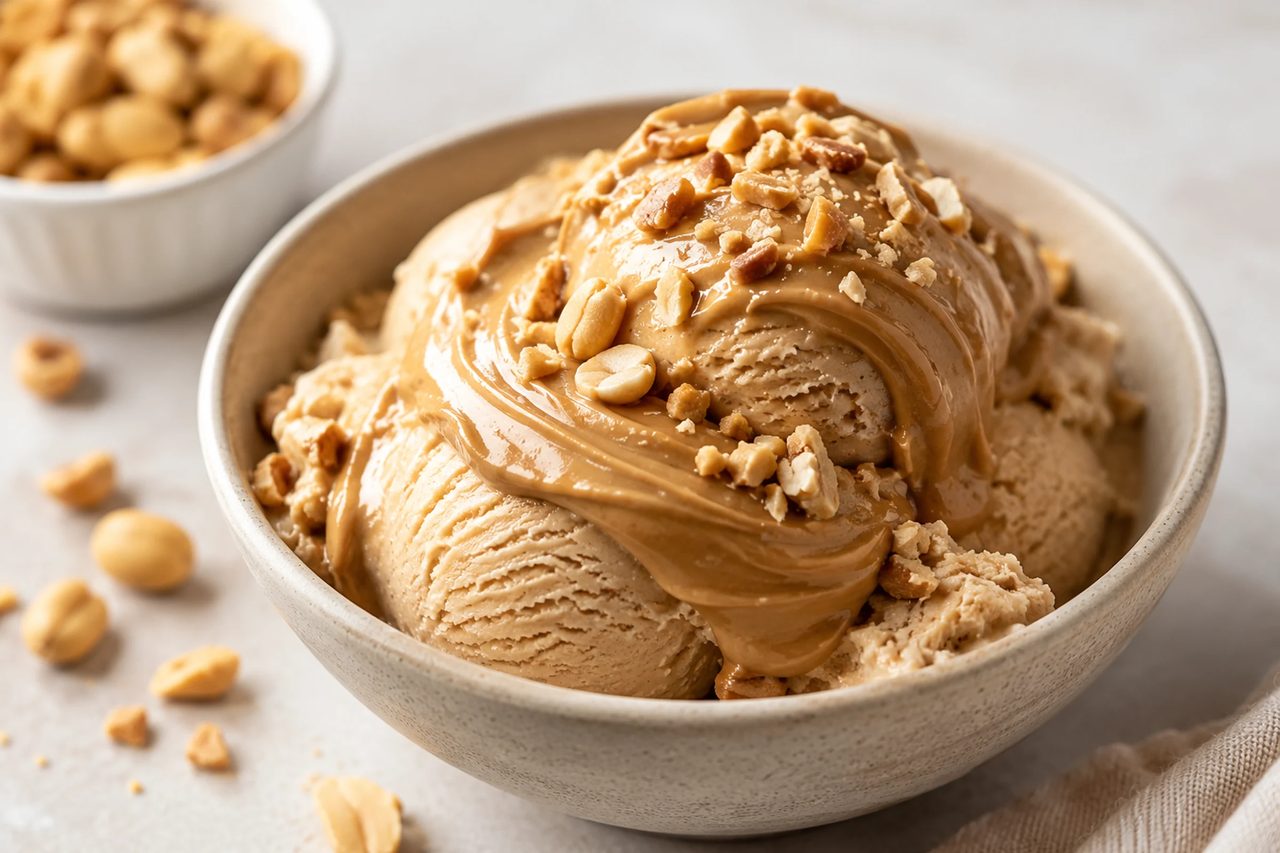
Peanut butter is the one flavor on this site that is savory before it is sweet. Roasted peanut is toasty, salty, and faintly bitter, and against a plain protein base that bitterness reads as depth rather than as a fault — which is why this pint tastes like dessert instead of a frozen shake. Powdered peanut butter is what makes it work at this fat level: peanuts with most of the oil pressed out and the rest milled to a flour, so two tablespoons carry the whole roasted flavor of a jar without the grease a spoonful of the spread leaves behind. The pinch of salt is doing real work too. It is the difference between peanut and sweet beige.
Texture in a lean base is built, not whipped. The machine folds in no air — it freezes the base solid and shaves the block — so whatever structure you mix in is what you eat. Here the tablespoon of instant pudding mix binds free water before it can grow into coarse ice, the sugar keeps the block from setting bone-hard, and one cup of milk to one scoop of protein keeps everything pourable. The peanut butter itself is the one adjustable part: trade the powder for a spoon of the real spread and the pint turns richer and noticeably softer, because you have added fat where the powder added almost none. Either way, freeze it dead flat for a full 24 hours and expect a powdery first spin.
Serve it straight from the spin for a soft-serve slump, or level the surface and give it another fifteen to twenty minutes in the freezer for scoops with a clean edge. From there it bends in the obvious directions and a few better ones: a cold jam ribbon folded in on the Mix-In program for PB&J, crushed pretzels for salt and snap, chopped dark chocolate or mini peanut butter cups for the candy version, chocolate protein powder in place of the vanilla. Warmed peanut butter poured over a scoop stiffens on contact into something close to a shell.
Ingredients
- 1 cup milk
- 1 scoop vanilla protein powder
- 2 tablespoons powdered peanut butter
- 1 tablespoon instant vanilla pudding mix
- 2 tablespoons granulated sugar
- Pinch of fine salt
Method
- In a bowl or large measuring cup, whisk the milk, protein powder, powdered peanut butter, pudding mix, sugar, and salt until completely smooth with no dry lumps.
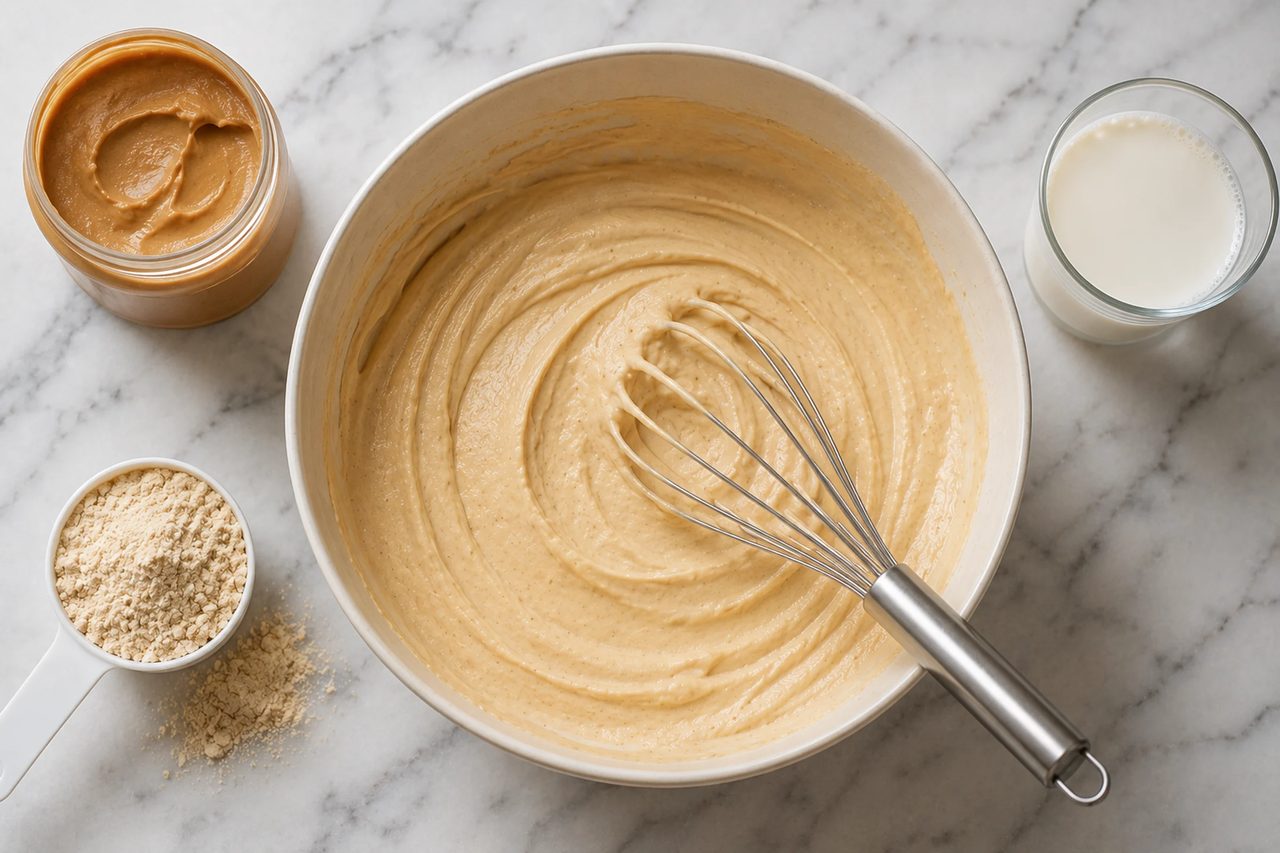
- Pour the base into a Ninja CREAMi or Swirl pint container, cap it, and freeze on a level shelf for at least 24 hours until solid.
- Remove the lid, place the pint in the outer bowl, and run the Ice Cream (or Lite Ice Cream) program until the machine finishes its spin.
- If the ice cream looks crumbly or powdery, add 1 tablespoon of milk and run the Re-spin program until it turns smooth and creamy.
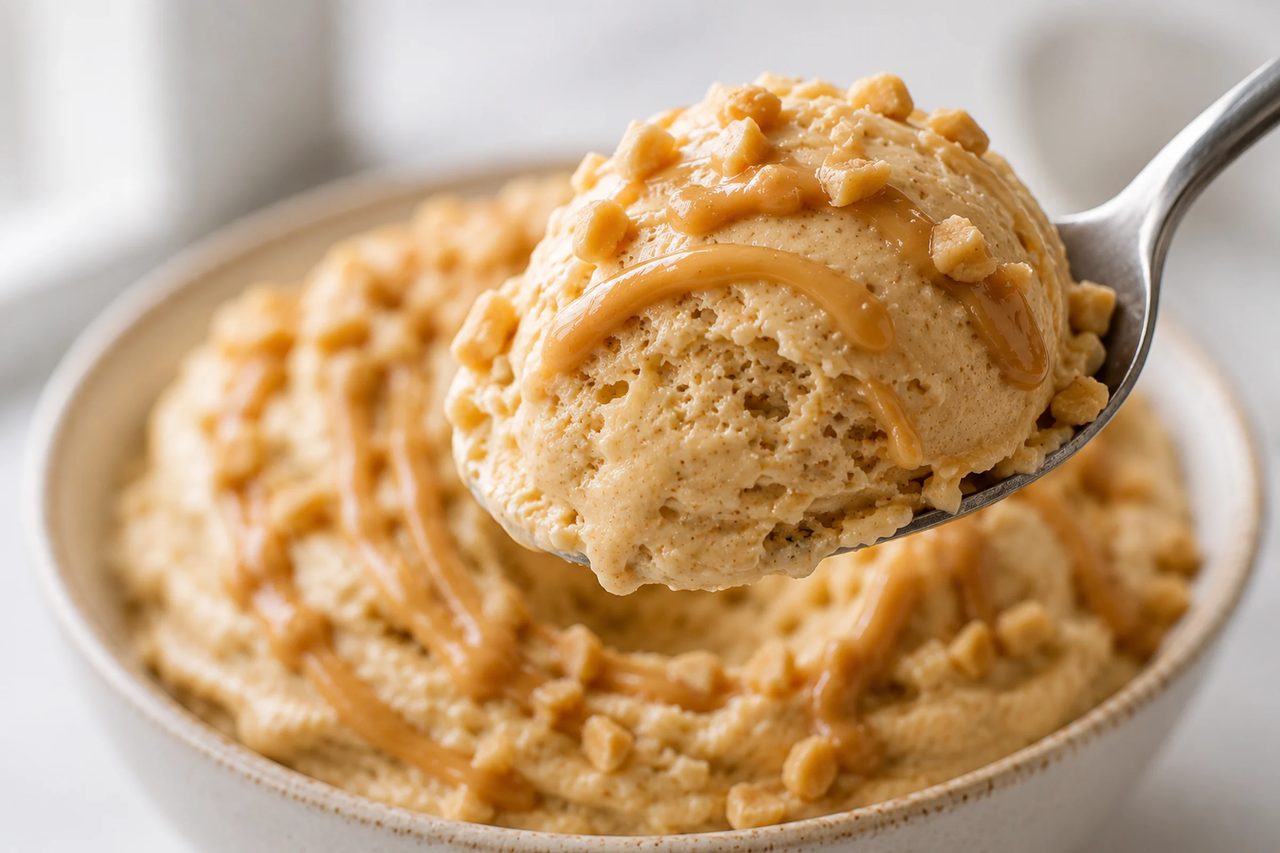
- Serve immediately for soft-serve texture, or smooth the top and refreeze for 15 to 20 minutes for firmer scoops.
Notes & tips
Powdered peanut butter is a lean ingredient doing a rich one’s job. It is peanuts with most of the oil pressed out and the rest milled to a flour, so two tablespoons carry a jar’s worth of roasted flavor and almost no fat. That leaves this base as lean as the vanilla and chocolate pints, where sugar and stabilizer decide texture instead of cream. Read the tub: a few brands are only peanuts, most are sweetened and salted, and a sweet one on top of the 2 tablespoons of sugar lands cloying.
The powder keeps drinking milk after the base looks smooth. Defatted peanut flour hydrates slowly and thickens as it goes, which is why a base whisked once can look perfect and still be carrying dry specks. Whisk it, leave it while you fetch the pint, then whisk again — the second pass is where the lumps go. Anything still dry does not dissolve in the freezer; it returns as a chalky fleck people routinely misdiagnose as ice.
What the palm oil in a no-stir jar is actually doing. A peanut butter that never separates has a hard fat in it — palm oil, or a fully hydrogenated vegetable oil — added for exactly that purpose: it crystallizes into a fine network that holds the liquid peanut oil in suspension. That helps twice here. It whisks into milk evenly instead of threatening to split, and being solid at freezer temperature it sets the pint a shade firmer than natural peanut butter would. The cost is flavor: no-stir jars taste sweeter and less roasted.
Why the full-fat version scoops softer than the other two protein pints. Trade the 2 tablespoons of powder for 1 tablespoon of the real spread and the pint changes physically, not only in flavor. Fat cannot freeze into ice the way water does: every spoonful you add is a spoonful that cannot set into a rigid crystal network, and the droplets break up the network the remaining water forms. The same freezer turns out a softer block here than it does for the vanilla or chocolate pints, which carry almost no fat. That is the point of the swap, not a fault: measure re-spin milk in teaspoons, and refreeze the leveled pint fifteen minutes for firm scoops.
Icy, crumbly, soupy, and chalky are four separate faults. Icy or coarse points at too little sugar or stabilizer, or a block that never set solid and level over a true 24 hours. Crumbly and powdery is normal for the powdered version, because a lean block shatters before it whips: 1 tablespoon of milk and the Re-spin program fixes it, not a second full cycle, which warms the pint toward soup. Soupy means the liquid overshot, or the pint stood out too long. Chalky belongs to the whisk, not the freezer.
Mix-ins that suit something salty and roasted. Add everything after the first spin, on the Mix-In program, so pieces stay whole. Jam is the obvious one: open a channel to the bottom of the pint and spoon it in cold, so you get a PB&J ribbon rather than a pink haze. Crushed pretzels bring salt and snap, chopped dark chocolate or mini peanut butter cups push it toward candy, honey-roasted peanuts double down. A spoon of cocoa or a pinch of cinnamon before freezing shifts the flavor without touching the ratio.
How far you can push the protein. Half an extra scoop plus a splash more milk is the safe increment. Protein powder is a drying solid, not a neutral filler: added without liquid it pushes the base past what the pudding mix can hold together, and the result is a firm, dusty pint. Two tablespoons of Greek yogurt raise protein instead, and bring fat this base lacks.
Storage, re-serving, and a base that never sees heat. Cap the pint, store it flat, and eat it within about two weeks. Give leftovers five minutes out of the freezer and a fresh Re-spin before serving, since a twice-frozen block sets firmer than the original spin did. Nothing here is cooked or contains egg, so the only rule ahead of the freezer is to refrigerate the mixed base rather than leave it standing — see the USDA’s advice on cold storage.
Peanut is the one ingredient here with no substitute. The allergen surface is wider than the ingredient list. A US label has to name peanut when it is an ingredient, but “may contain” and shared-equipment warnings are voluntary, so their absence proves nothing — and the protein powder and pudding mix add milk, soy, and tree-nut risk of their own. Equipment counts too: the powder is a fine dust that drifts off the spoon, and the pint, lid, outer bowl, and paddle all hold residue — wash all four in hot soapy water before spinning a base for anyone who avoids peanuts, and keep a separate pint if that is a standing concern.
Peanut Butter Protein Ice Cream FAQ
Can I use real peanut butter instead of powdered?
Yes: 1 tablespoon of the spread in place of the 2 tablespoons of powder. That spoonful puts back the oil the powder had removed, and since fat is the other thing that keeps ice crystals small, you can drop the pudding mix to half a tablespoon rather than run fat and stabilizer at full strength together. Whisk it into the milk on its own first, while there is enough loose liquid to move it; dropped into a finished base it sinks and freezes at the bottom of the pint as a nub.
Natural or no-stir peanut butter — does it matter here?
It changes the set slightly and the flavor more. A jar that never separates contains a hard fat, usually palm oil or a fully hydrogenated vegetable oil, which stays solid at freezer temperature, so expect a marginally firmer pint from a no-stir jar. Natural peanut butter is peanuts and salt with the oil loose on top, so stir it all the way to the bottom before measuring or you will lift out oil or paste rather than the spread the recipe assumes. No-stir jars also taste sweeter and less roasted.
Why is my peanut butter pint chalky rather than icy?
Chalky is a hydration problem, not a freezing one, and the two get confused constantly. Powdered peanut butter and protein powder both keep absorbing liquid for a minute after the base looks smooth, so a base whisked once and poured straight into the pint hides dry specks that come back as chalky flecks in the scoop. Whisk, let it stand a minute, whisk again. If it is smooth going in and still chalky coming out, you have too much powder for the cup of milk.
Can I make a peanut-free version for someone with a peanut allergy?
No. Take the peanut out and there is nothing left of this recipe — make the vanilla protein base instead and flavor that. A sunflower seed butter pint is a genuinely different recipe rather than a substitution in this one. Either way, wash the pint, lid, outer bowl, and paddle in hot soapy water first, because all four hold residue from a peanut base and the powder is a fine dust that travels further than you expect.
Can I make this peanut butter pint dairy-free?
Use a barista-style oat, soy, or coconut blend rather than a thin almond milk, because those carry more fat and fat is what this base is already short of. Then check the two powders: protein blends and instant pudding both commonly contain milk, and 1/8 teaspoon of xanthan gum stands in for the pudding if yours does. A dairy-free pint made with powdered peanut butter is about as lean as anything on this site, which is exactly when the tablespoon of real peanut butter earns its place.
Related recipes
Vanilla Bean Protein Ice Cream
A creamy, high-protein vanilla ice cream made in the Ninja CREAMi or Swirl, with a stabilized base that spins smooth every time.
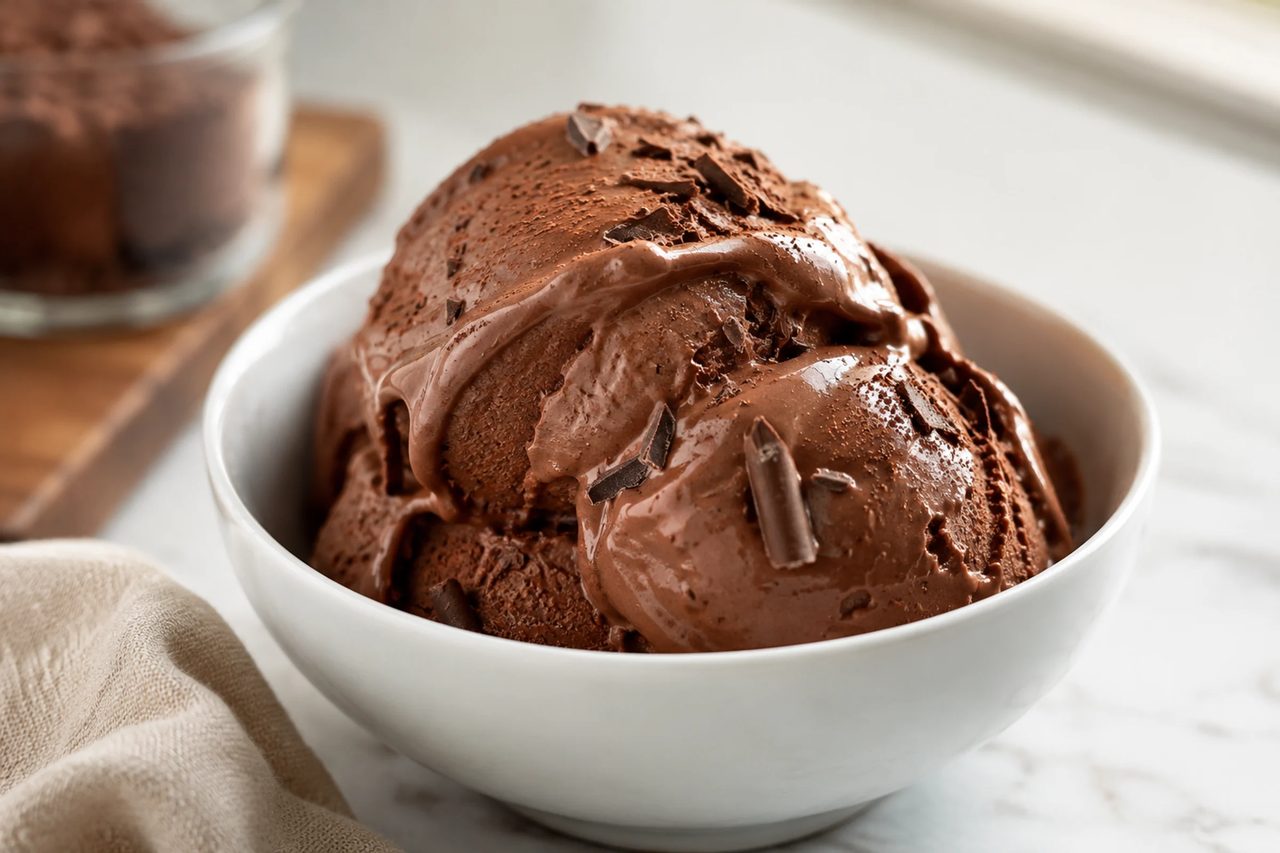
Chocolate Protein Ice Cream
A rich, high-protein chocolate ice cream made in the Ninja CREAMi or Swirl, with a stabilized cocoa base that spins smooth and scoopable.