Banana Nice Cream
A dairy-free banana nice cream for the Ninja CREAMi or Swirl, where heavily speckled bananas do almost all of the sweetening and thickening themselves.
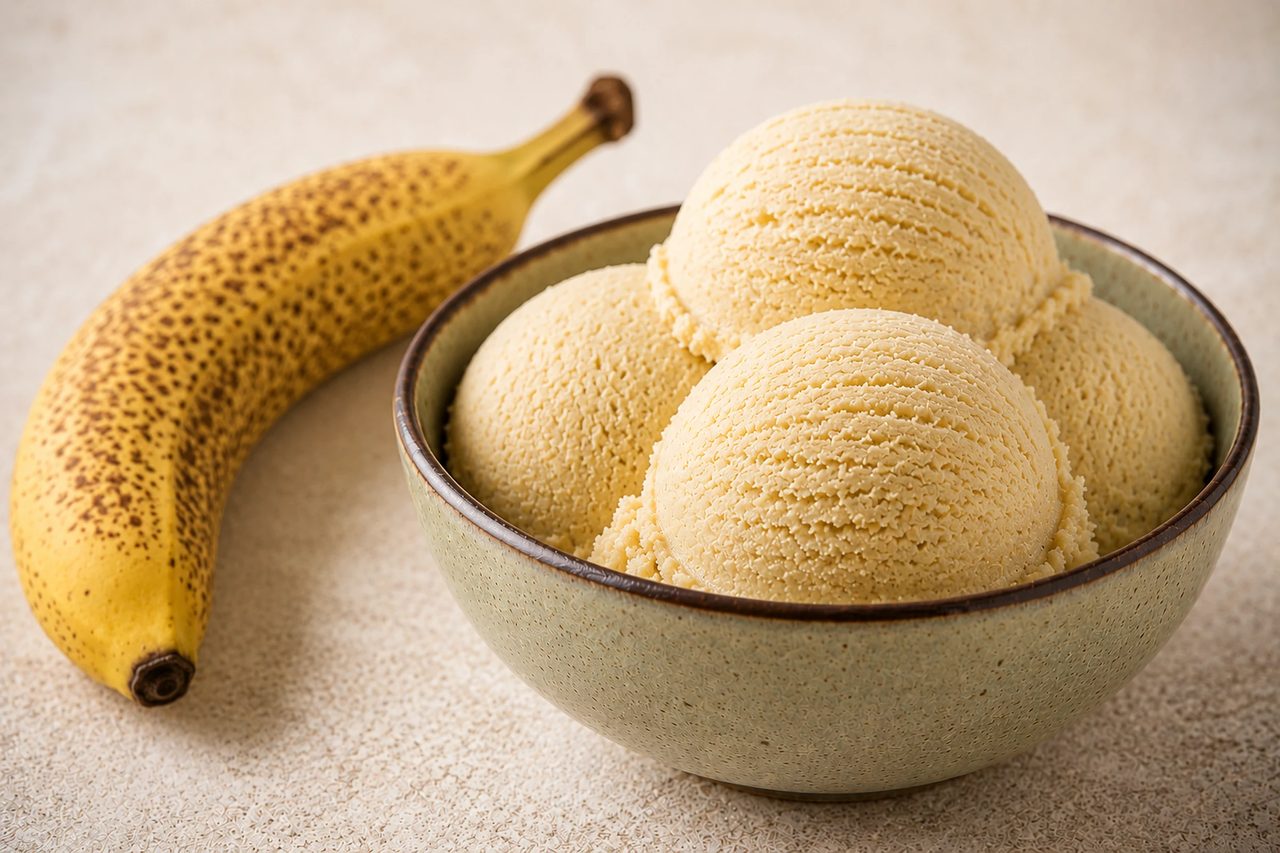
Of the dairy-free pints on this site, this one is deliberately the leanest. Heavily speckled bananas arrive already carrying what every other base has to be given: sugar, body, and enough soft, thick flesh to blend into a purée rather than a liquid. A quarter cup of oat milk, a spoonful of maple syrup, vanilla, lemon, and salt are there to season that fruit, not to rescue it. Nothing in the pint is pretending to be cream, which is exactly why it tastes like banana instead of like a compromise.
Ripeness is the variable that decides everything, and it is worth being blunt about it. A yellow banana with green shoulders is still mostly starch: it blends pasty, tastes flat, and sets up firm. A banana whose peel is freckled dark brown has converted much of that starch to sugar and softened its flesh, so the purée is sweeter, looser, and thicker with dissolved solids. That is also why this base needs about a third of the added sugar the strawberry or mango sorbet does — in a sorbet, sugar is the only thing standing between fruit water and a glassy block, while ripe banana brings its own sugars, starch, and pectin to bind free water. Freeze the pint dead flat for a full 24 hours anyway; the blade can only shave cleanly through a block that set solid and even.
Serve it straight out of the spin as a soft, pale-gold soft serve, or smooth the top and refreeze fifteen minutes for scoops that hold their shape in a bowl. From there it takes flavor easily: two tablespoons of cocoa powder in the base makes it chocolate-banana, a spoonful of peanut butter or a pinch of cinnamon reads like banana bread, and toasted walnuts or dairy-free chocolate chips folded in on the Mix-In program keep their crunch instead of disappearing into the pint.
Ingredients
- 3 medium heavily speckled bananas, peeled and broken into chunks
- 1/4 cup unsweetened oat milk
- 1 tablespoon pure maple syrup
- 1 teaspoon vanilla extract
- 1 teaspoon fresh lemon juice
- Pinch of fine salt
Method
- In a blender, combine the banana chunks, oat milk, maple syrup, vanilla, lemon juice, and salt. Blend until the purée is completely smooth and pourable, scraping down the sides once, with no fibrous streaks or unblended lumps of banana left.
- Taste the base while it is still liquid, since this is the only point at which sweetener can disperse evenly. If the bananas were less than heavily speckled and the purée tastes flat, blend in maple syrup 1 teaspoon at a time until the base tastes a touch sweeter than you want the frozen pint to be.
- Pour the purée into a Ninja CREAMi or Swirl pint container, cap it, and freeze on a level shelf for at least 24 hours until the base is frozen solid and flat.
- Remove the lid, place the pint in the outer bowl, and run the Sorbet program, which matches this fruit-forward dairy-free base, until the machine finishes its spin.
- If the nice cream looks crumbly or powdery, add 1 tablespoon of oat milk and run the Re-spin program until it turns smooth and creamy.
- Serve immediately for a soft, scoopable texture, or smooth the top and refreeze for 15 to 20 minutes for firmer scoops.
Notes & tips
Ripeness is the whole recipe. Everything this pint has, it gets from the fruit, so the ripeness of the bananas is not a detail — it is the main ingredient decision. As bananas ripen, much of their starch converts to sugar and the flesh softens, which is why a heavily speckled banana blends into a sweet, thick purée while a firm yellow one blends into something closer to paste. Judge by the peel and by feel, not by the calendar: real dark-brown freckling and give under light pressure.
Why this needs less added sugar than a sorbet. In the strawberry and mango sorbets, 3 tablespoons of sugar are doing structural work, because fruit water with nothing dissolved in it freezes into a glassy block. Ripe banana arrives already loaded with dissolved sugars plus starch and pectin, so the purée is thick with soluble solids that hold onto free water the way a spoon of instant pudding does in a protein base. That is why 1 tablespoon of maple syrup is enough here. It is also why the recipe is unforgiving about underripe fruit: less sugar in the banana means less of the thing keeping ice crystals small.
Blend fresh, not frozen. This is the step that separates a CREAMi banana pint from blender nice cream. Skip the pre-freeze, pour a smooth liquid purée into the pint, and let the full 24-hour flat freeze do the freezing. A level shelf matters more than people expect — a tilted pint sets with a sloped surface the blade cannot read cleanly, and that shows up as an icy first spin.
Taste before it goes in the pint. Banana ripeness varies far more between bunches than a bag of frozen mango does, so the base is worth tasting every time. Sweetener can only disperse evenly while the base is still liquid; once the block is frozen, a spoonful of syrup stirred into a spun pint just streaks. Frozen desserts also read less sweet cold than the base does at room temperature, so aim for a base that tastes slightly sweeter than you want the finished scoop to be.
Why the re-spin matters. A crumbly or powdery first pass is normal with a lean, fruit-based mix, because the blade shaves a rock-hard block into fine shards before friction warms it. Add 1 tablespoon of oat milk and run the machine’s dedicated Re-spin program rather than re-running the full cycle, which over-processes and warms the pint toward soup instead of binding those shards into soft serve.
Troubleshoot the texture. Icy or coarse points first at the bananas: fruit picked up while it was still firm brings less sugar, and sugar is what keeps this crystal structure fine. Short sweetener or a pint that never froze level for its full day will do the same thing. Crumbly or powdery means it wants the Re-spin plus a tablespoon of oat milk. Too soft or soupy means it over-processed or was under-frozen, so smooth the top and refreeze 15 to 20 minutes for firmer scoops. Fibrous threads in the finished pint are a blending problem, not a spinning one — blend longer next time.
Flavor variations. Two tablespoons of unsweetened cocoa powder in the base makes it chocolate-banana and will want the sweetener nudged up. A tablespoon of peanut butter or almond butter plus a pinch of cinnamon pushes it toward banana bread. For pieces that stay whole, use the Mix-In program after the first spin: poke a hole to the bottom of the pint, add toasted walnuts or dairy-free chocolate chips, and run it so they fold through instead of pulverizing.
Milk swaps. Unsweetened oat milk is the default because it is mild and slightly viscous, but any unsweetened plant milk works in the same quarter cup. Almond and cashew milk are thinner and a touch more neutral; full-fat coconut milk makes a richer, denser pint and reads faintly tropical against the banana. If you use a sweetened carton, pull the maple syrup back to 2 teaspoons.
Storage and re-serving. Freeze leftovers in the same pint, capped and level. Before the next serving, let it sit 5 minutes, then run a fresh Re-spin, since refrozen CREAMi pints almost always need one. Use within about two weeks for the best texture. If the blended base is not going straight into the freezer, keep it refrigerated and use it promptly, per general USDA cold-storage guidance.
Dairy-free by design, plus an allergen note. As written this is dairy-free, egg-free, nut-free, and vegan, which is the point of the recipe. Two things to check anyway: oat milk is not automatically gluten-free, so read the carton if that matters, and swapping in almond, cashew, or soy milk introduces those allergens. Any mix-in you add brings its own — walnuts, and often soy or milk in chocolate chips.
Banana Nice Cream FAQ
How ripe do the bananas actually need to be?
Heavily speckled — the peel should carry real dark-brown freckling, not just a few spots, and the fruit should feel soft under light pressure. Yellow bananas with green shoulders are still mostly starch: they blend pasty, taste flat, and set firmer in the pint. Bananas that have gone almost fully black are fine for flavor and are the sweetest option here, but blend and freeze them the day they get there.
Do I need to freeze the bananas before blending?
No, and it works against you here. Blender nice cream needs frozen fruit because the blender supplies no cold of its own; the CREAMi freezes the base itself over 24 hours. Frozen chunks blend into a stiff paste that is hard to level in the pint, and a base that does not set flat and even is the single most common cause of an icy spin.
Which program should I run for banana nice cream?
Sorbet, because the program should match the base and this one is fruit-forward and dairy-free, even though banana spins creamier than a true sorbet does. Lite Ice Cream is a reasonable lighter starting point if you would rather begin gently — you can always follow either one with a Re-spin.
Can I cut the maple syrup out entirely?
With genuinely black-speckled fruit you can drop to 2 teaspoons and still get a scoopable pint. Going to zero leans on the fruit alone, and the result sets noticeably firmer, so expect to need the Re-spin with a tablespoon of oat milk. Agave or date syrup swap in one-for-one and keep it vegan; honey works if that is not a concern.
Why did my banana base turn grey or brown?
Cut banana flesh darkens once it is exposed to air, which is what the teaspoon of lemon juice in the base is doing there. Blend, taste, and get the pint into the freezer without a long pause on the counter. A base left in the fridge for a few hours will still spin, but it will read dull beige rather than pale gold.
Related recipes
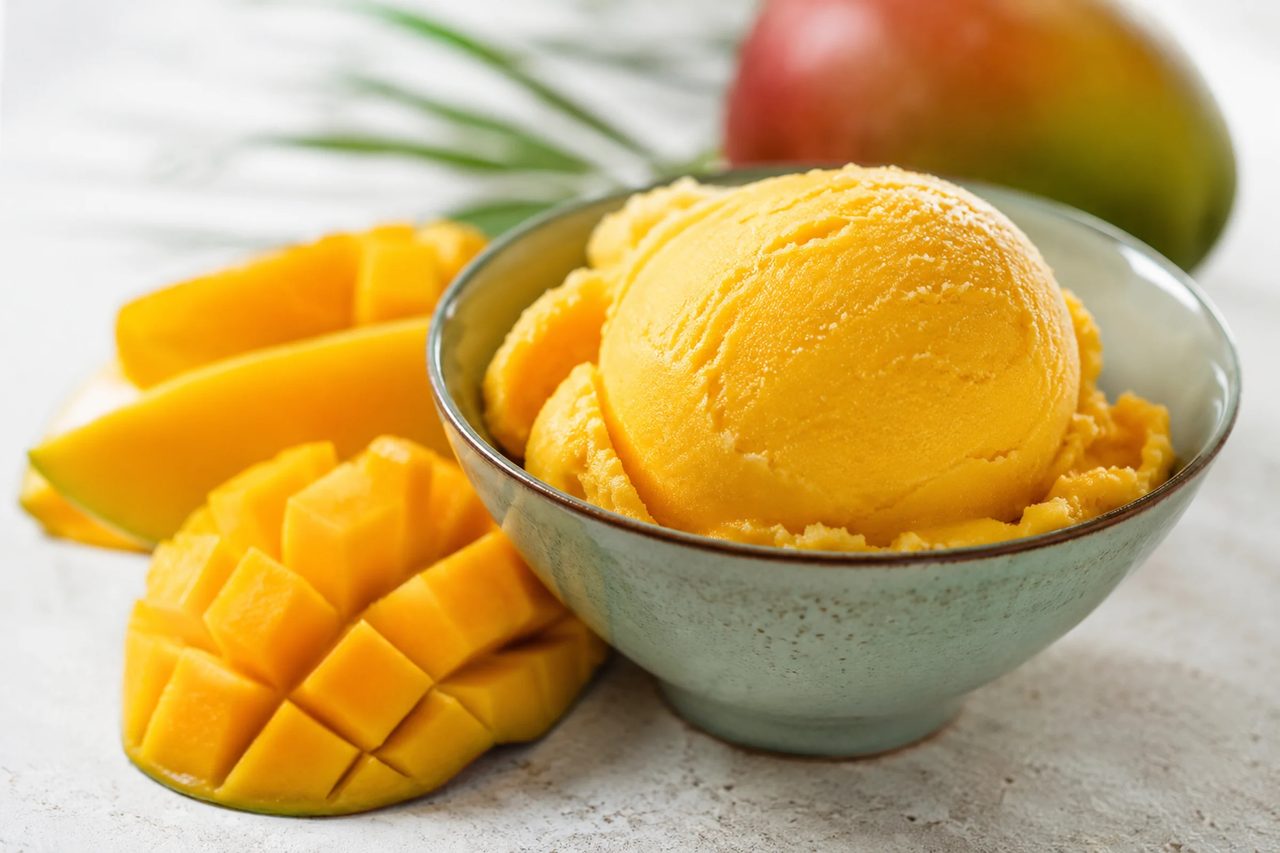
Mango Sorbet
A dairy-free tropical mango sorbet made in the Ninja CREAMi or Swirl, with a simple frozen-fruit base that spins into bright, smooth scoops.
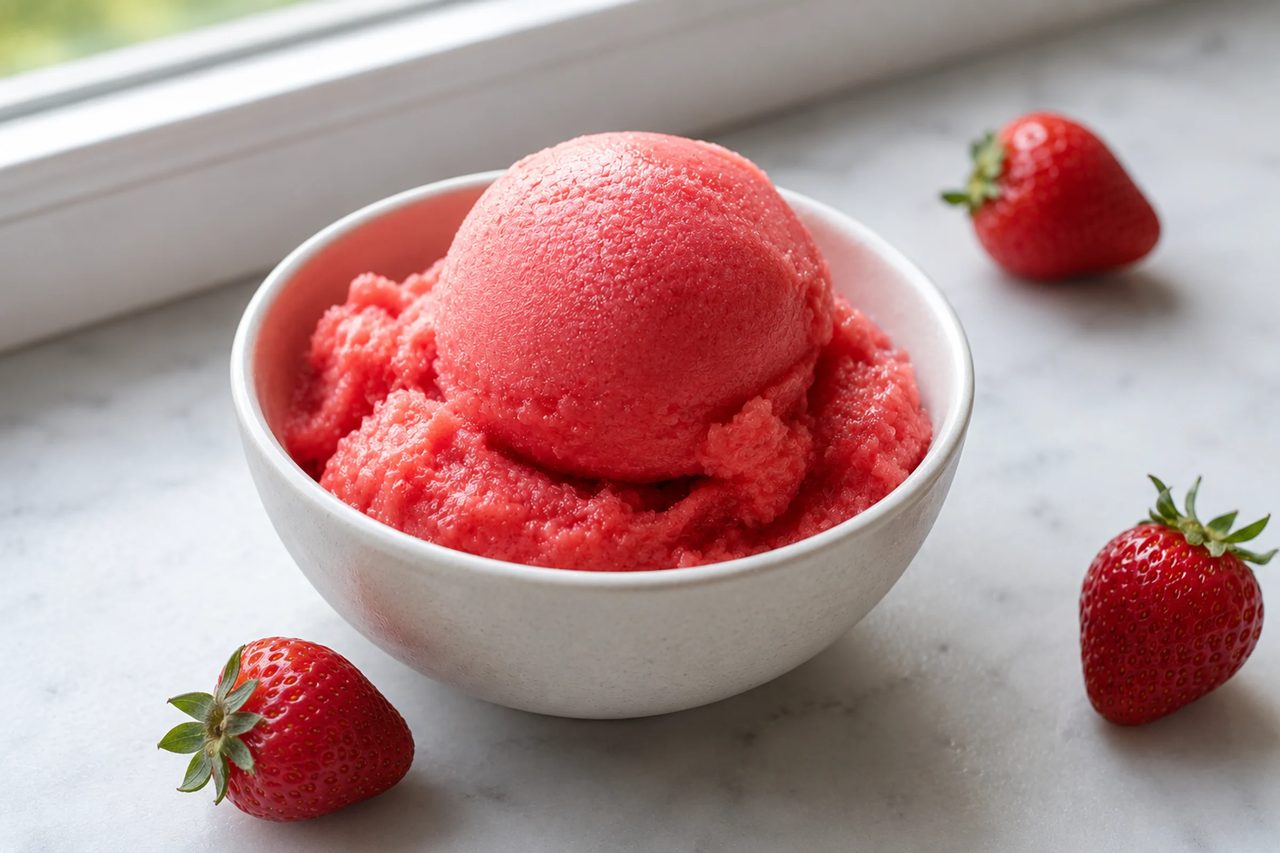
Strawberry Sorbet
A dairy-free, fruit-forward strawberry sorbet made in the Ninja CREAMi or Swirl, with a simple frozen-berry base that spins into bright, smooth scoops.