Cookie Dough Ice Cream
A brown-sugar vanilla base spun in the Ninja CREAMi or Swirl, then folded with egg-free cookie dough pieces built on flour that is sold heat-treated and safe to eat raw.
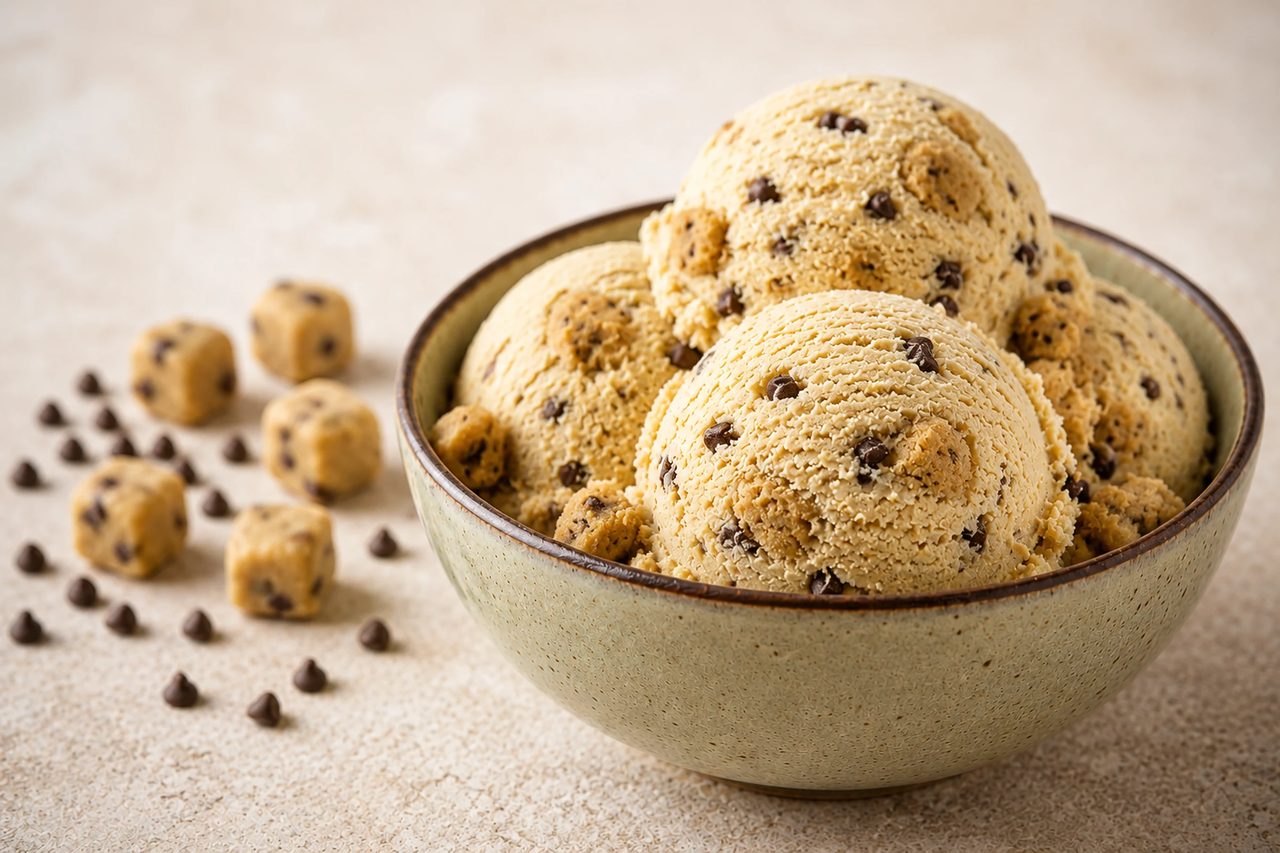
Cookie dough is the one flavor on this site where the technique question is really a safety question. Most cookie dough is built to be baked, and baking is what makes it safe: flour is a raw agricultural product, and the raw eggs in a standard dough are a second hazard. The FDA is blunt about the exact thing this recipe would otherwise be, advising against using raw cookie dough in ready-to-eat ice cream. So this dough is built differently from the start: no egg at all, and flour that arrives already heat-treated and labeled safe to eat raw. Get those two decisions right and you get the flavor without the gamble.
Texture comes from three choices. Light brown sugar in the base does double duty, lowering the freezing point so the pint never sets bone-hard while lending the molasses note that makes vanilla ice cream read as cookie dough. A tablespoon of instant pudding mix binds free water so the blade shaves fine crystals instead of coarse ice. The dough itself is the part people rush: roll it into pea-sized pieces and freeze them firm before they ever meet the pint, then add them through the Mix-In program after the first spin so they stay as distinct chunks instead of smearing into a streaky paste.
Serve it straight from the machine for soft-serve, or press the top flat and refreeze fifteen minutes for scoops that hold a cone. The dough is a template once you have it: brown the butter before creaming it for a toffee note, swap the mini chips for chopped toasted pecans or butterscotch chips, or hold back half the dough and press it onto the surface so the first spoonful hits a seam of it. A pinch of flaky salt over the top sharpens the brown sugar considerably.
Ingredients
For the ice cream base
- 1 cup whole milk
- 2 tablespoons heavy cream
- 3 tablespoons light brown sugar, packed
- 1 tablespoon instant vanilla pudding mix
- 1 teaspoon vanilla extract
- Pinch of fine salt
For the egg-free cookie dough pieces
- 1/4 cup heat-treated flour labeled safe to eat raw
- 2 tablespoons unsalted butter, softened
- 2 tablespoons light brown sugar, packed
- 2 tablespoons mini chocolate chips
- 1/4 teaspoon vanilla extract
- 1 to 2 teaspoons whole milk
- Pinch of fine salt
Method
- Make the egg-free dough piecesStir the softened butter and brown sugar together until creamy, then add the heat-treated flour, vanilla, and salt and stir to a stiff dough. Add the milk a teaspoon at a time, only as much as it takes to bring the dough together, then work in the mini chocolate chips. Pinch off pea-sized pieces onto a plate and freeze them uncovered until firm, at least 30 minutes; firm pieces fold through the pint as distinct chunks, while soft dough smears into streaks.
- In a bowl or large measuring cup, whisk the milk, cream, brown sugar, pudding mix, vanilla extract, and salt until completely smooth and the brown sugar has dissolved with no dry lumps.
- Pour the base into a Ninja CREAMi or Swirl pint container, cap it, and freeze on a level shelf for at least 24 hours until solid.
- Remove the lid, place the pint in the outer bowl, and run the Ice Cream program until the machine finishes its spin.
- If the base looks crumbly or powdery, add 1 tablespoon of milk and run the Re-spin program until it turns smooth and creamy.
- Poke a hole down to the bottom of the pint, drop in the frozen dough pieces, and run the Mix-In program so they fold through whole rather than breaking up.
- Serve immediately for soft-serve texture, or smooth the top and refreeze for 15 to 20 minutes for firmer scoops.
Notes & tips
Start with flour that is already safe. This is the one decision the recipe really turns on. Flour is a raw agricultural product, and grinding or bleaching it does not kill harmful bacteria. The widely repeated trick of microwaving or oven-toasting your own flour is not what the FDA recommends: its guidance on handling flour safely says not to heat treat flour at home, because home treatments may not effectively kill all bacteria and do not make it safe to eat raw. Buy flour that is sold heat-treated and labeled safe to eat raw, where the treatment has been validated by the manufacturer, or start from a tub of prepared edible cookie dough.
No egg, by design. A standard cookie dough carries two raw hazards, not one: the flour and the eggs. Since this dough never gets baked, the egg is simply omitted rather than substituted. Butter carries the richness, brown sugar carries the flavor, and a teaspoon or two of milk brings the dough together. Do not add an egg “for texture” to a dough that will be eaten as-is, and do not treat a pasteurized egg as an upgrade here, because the flour question would still be unresolved.
Freeze the dough pieces before they go in. Roll pea-sized pieces and freeze them uncovered until firm, at least 30 minutes, which the 24-hour base freeze gives you for free. Room-temperature dough is soft enough that the blade drags it into streaks during the Mix-In pass, which tastes fine but loses the chunk-against-cream contrast the flavor depends on. Pea-sized is deliberate: larger lumps freeze hard enough to be unpleasant to bite, smaller ones vanish.
Brown sugar and the stabilizer are both doing work. Light brown sugar is here for flavor and for physics. Its molasses note is most of what separates this from plain vanilla, and like any sugar it lowers the freezing point so the block never sets bone-hard. Separately, the tablespoon of instant vanilla pudding mix binds free water through the long freeze so the machine shaves fine crystals rather than coarse ice. If you want to swap the pudding mix, 1 tablespoon of softened cream cheese or a scant 1/8 teaspoon of xanthan gum does the same job; more than that turns the pint gummy. What you should not do is drop it without a replacement.
Why the re-spin matters. A crumbly, powdery first pass is normal, not a failure. A lean, rock-hard block shatters before it can whip, so add about a tablespoon of milk and run the dedicated Re-spin program rather than running Ice Cream a second time, which warms the pint toward soup before the dough ever goes in. Get the base smooth first and add the dough only afterward, since a second spin after the mix-in is what breaks the chunks down.
Troubleshooting texture. Icy or coarse: too little sugar or stabilizer, or the pint did not freeze flat and level for the full 24 hours. Crumbly or powdery: add a tablespoon of milk and re-spin. Too soft or soupy: too much liquid on the re-spin or the pint warmed up, so smooth the top and refreeze 15 to 20 minutes. Dough smeared into streaks rather than chunks: the pieces were not frozen firm, or the pint went through another full spin after the mix-in.
Variations worth trying. Brown the butter and let it resolidify before creaming it for a toffee-edged dough. Swap the mini chips for chopped toasted pecans, butterscotch chips, or chopped pretzels for salt and crunch. Hold back half the dough and press it across the surface after the mix-in so the first few spoonfuls hit a concentrated seam. A quarter teaspoon of espresso powder in the base deepens the brown sugar, and flaky salt over the finished pint sharpens it.
Storage and re-serving. Freeze leftovers in the same capped pint, stored flat. Let it sit about 5 minutes, then run a fresh Re-spin before serving, since refrozen pints almost always need one. Be aware that re-spinning a pint that already has the dough folded in will break the pieces down further, so it is worth finishing this pint over a few days rather than stretching it across weeks.
Food safety and allergens. The whole point of this build is that it is safe to eat unbaked: heat-treated flour labeled safe to eat raw, and no egg. Keep the mixed base refrigerated if you are not freezing it straight away, and per the FDA guidance linked above, clean up carefully after working with flour, washing hands, bowls, and counters with soap and warm water, since flour is a powder that spreads easily. Common allergens here are wheat, dairy, and often soy in the chocolate chips and the instant pudding mix, so read labels before serving guests.
Cookie Dough Ice Cream FAQ
Can I use regular flour if I microwave or bake it first?
The FDA advises against it: its flour handling guidance says not to heat treat flour at home, because home treatments may not effectively kill all bacteria and do not make the flour safe to eat raw. That is why this recipe calls for flour sold already heat-treated and labeled safe to eat raw, rather than telling you to toast your own. If you cannot find it, buy a tub of prepared edible cookie dough and cut it into pieces instead.
Why is there no egg in the cookie dough?
Because nothing here ever gets cooked. Raw eggs are a hazard alongside raw flour, and the FDA notes that cooking is the only way to be sure foods made with flour and raw eggs are safe. This dough is never baked, so the egg is left out entirely and the 2 tablespoons of butter plus a teaspoon or two of milk supply the moisture and chew it would have contributed.
Can I use refrigerated break-and-bake dough from a tube?
Only if the package says it is safe to eat raw. Standard refrigerated cookie dough is sold to be baked, and the FDA specifically says not to use raw cookie dough in ready-to-eat ice cream. Some brands now sell tubes formulated to be eaten unbaked, so the label is the thing to read, not the format of the packaging.
When do the dough pieces go in?
After the first spin, through the Mix-In program, never into the base before the 24-hour freeze. Dough frozen into the block gets shaved apart by the blade and disappears into the pint as a grainy haze instead of staying as chunks. Freeze the pieces firm first, or they smear.
Why did my dough pieces turn rock hard in the pint?
Too little fat and sugar relative to flour, usually from packing the 1/4 cup of flour tight or adding extra to stiffen a sticky dough. Butter and brown sugar stay soft at freezer temperature while flour does not, so measure the flour loosely and bring a dry dough together with milk a teaspoon at a time rather than with more flour.
Related recipes
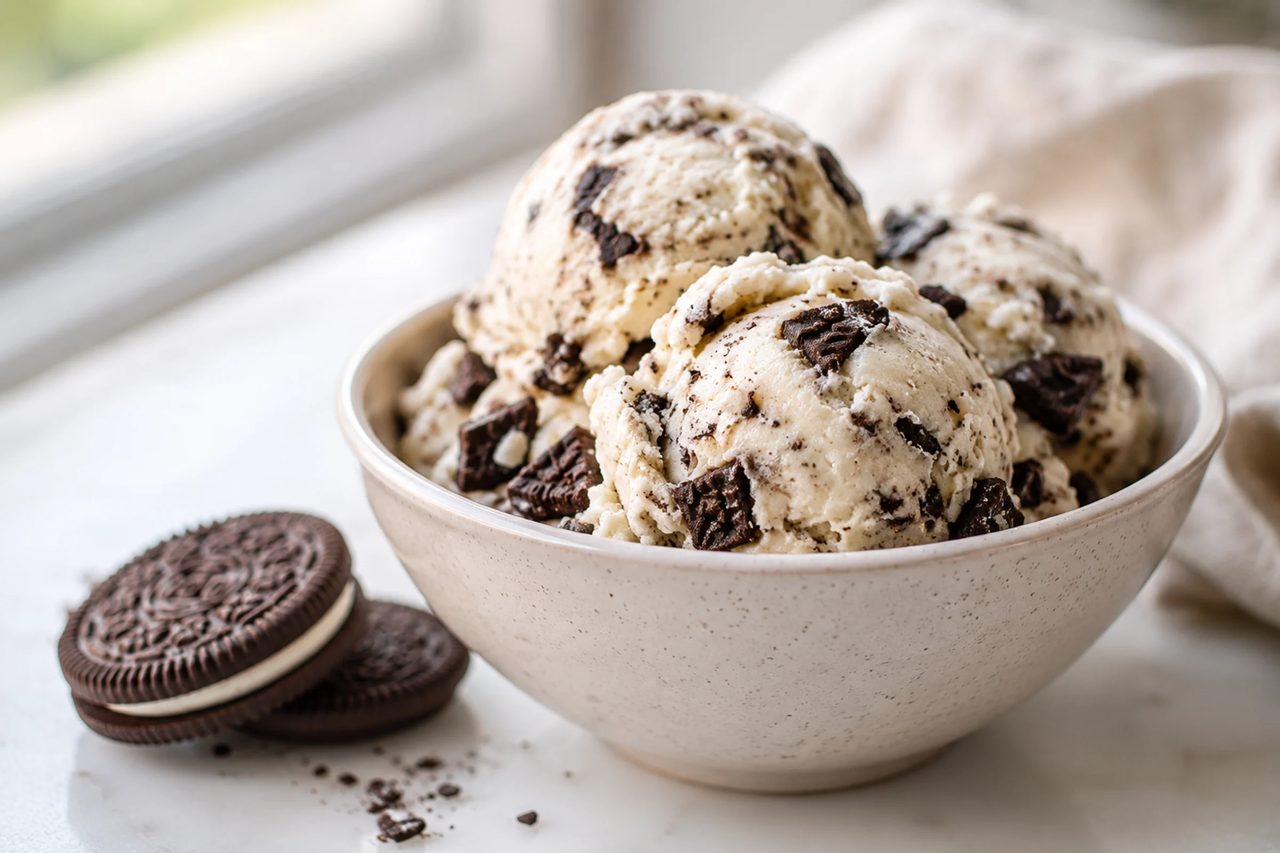
Cookies and Cream Ice Cream
A creamy vanilla base spun in the Ninja CREAMi or Swirl, then loaded with crushed chocolate sandwich cookies using the Mix-in program.
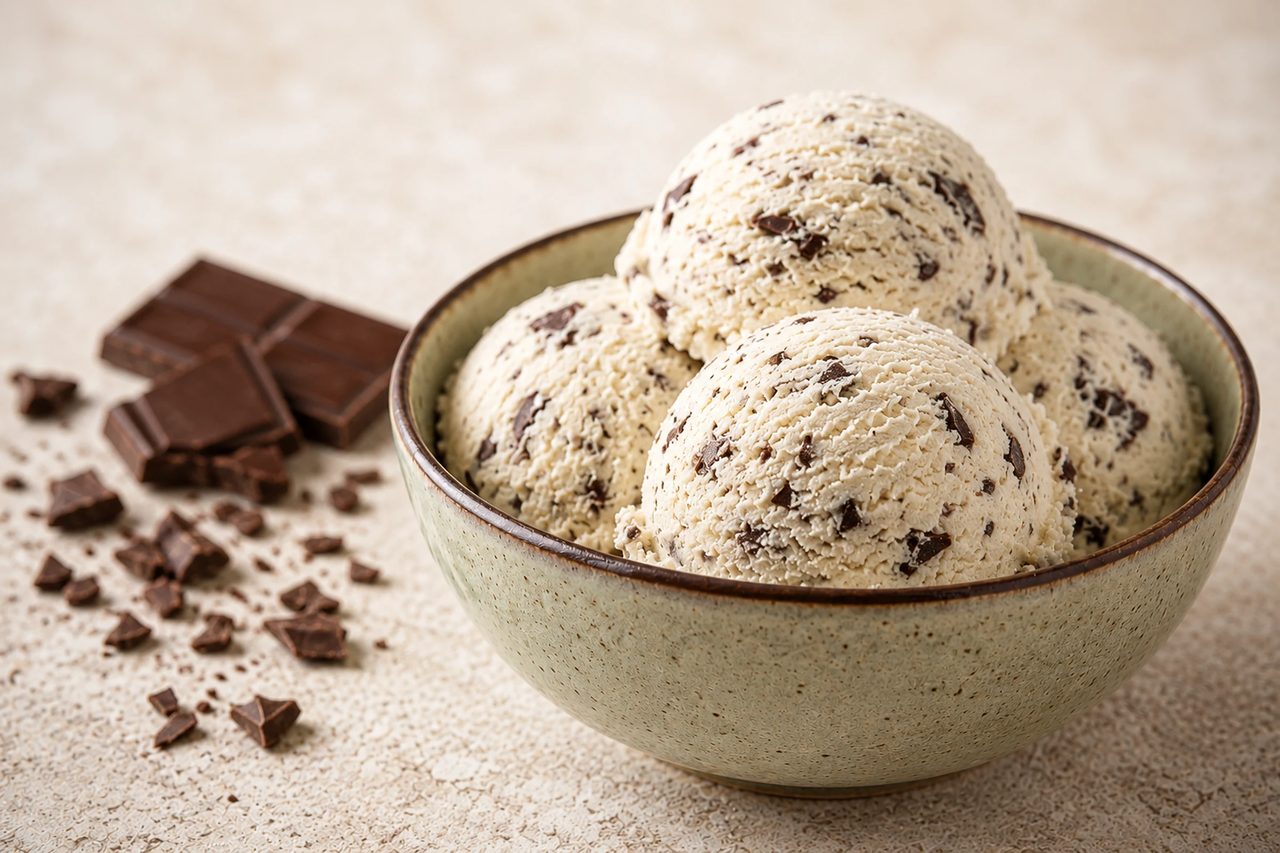
Mint Chocolate Chip Ice Cream
A cool, clean peppermint ice cream spun in the Ninja CREAMi or Swirl, with finely chopped dark chocolate folded in on a Mix-in pass so it stays in shards.